Chitradurga in India's Freedom StruggleChitradurga, historically celebrated as a land of courage, sacrifice and resistance, played a meaningful role in India’s freedom struggle. The district that had once witnessed the…
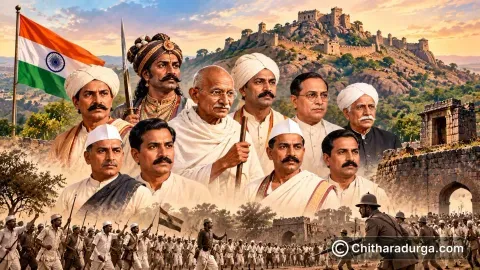
Chitradurga is widely remembered as the land of courage and resistance. Centuries before India's modern freedom movement, the region had witnessed the valour of the Nayaka rulers and legendary figures such as Onake Obavva. During the twentieth century, this tradition of resistance took a new form as people of Chitradurga joined the national struggle against colonial rule.
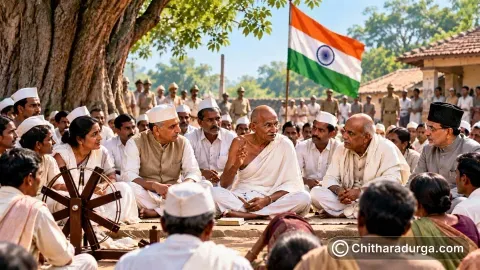
The Gandhian Movement in Chitradurga district occupies an important place in the region’s modern history. During India’s freedom struggle, Mahatma Gandhi’s principles of Satyagraha, Ahimsa, Swadeshi, Khadi, prohibition, social equality, simplicity and village upliftment inspired political workers, teachers, students, women and ordinary villagers across the region.
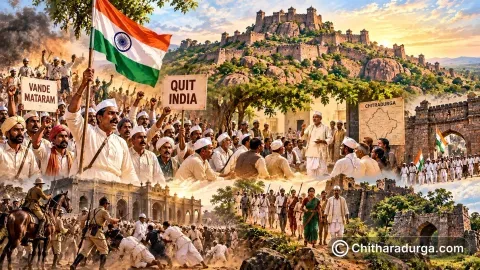
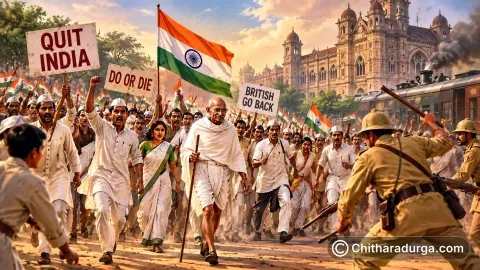
The Quit India Movement of 1942 was one of the most decisive phases of India's struggle for independence, and Chitradurga district was among the active centres of the movement in the then princely State of Mysore. Historical accounts of the freedom struggle in Karnataka identify Chitradurga alongside Mysore, Bangalore, Tumkur, Dharwad, Belgaum and other important centres where the movement generated considerable political activity.
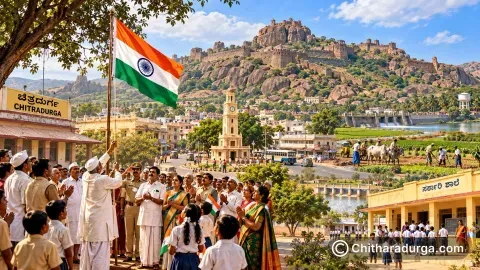
When India attained independence on 15 August 1947, the Chitradurga region stood at an important point of transition. A land known for its formidable fort, Nayaka rulers, warrior traditions and historic resistance, Chitradurga was entering a new democratic era after centuries of changing political rule.

 Freedom Movement Time
 Freedom Movement Time
 Freedom Movement Time
 Freedom Movement Time
 Freedom Movement Time
 Raghavendra Padmashali