Chitradurga District during the Quit India Movement
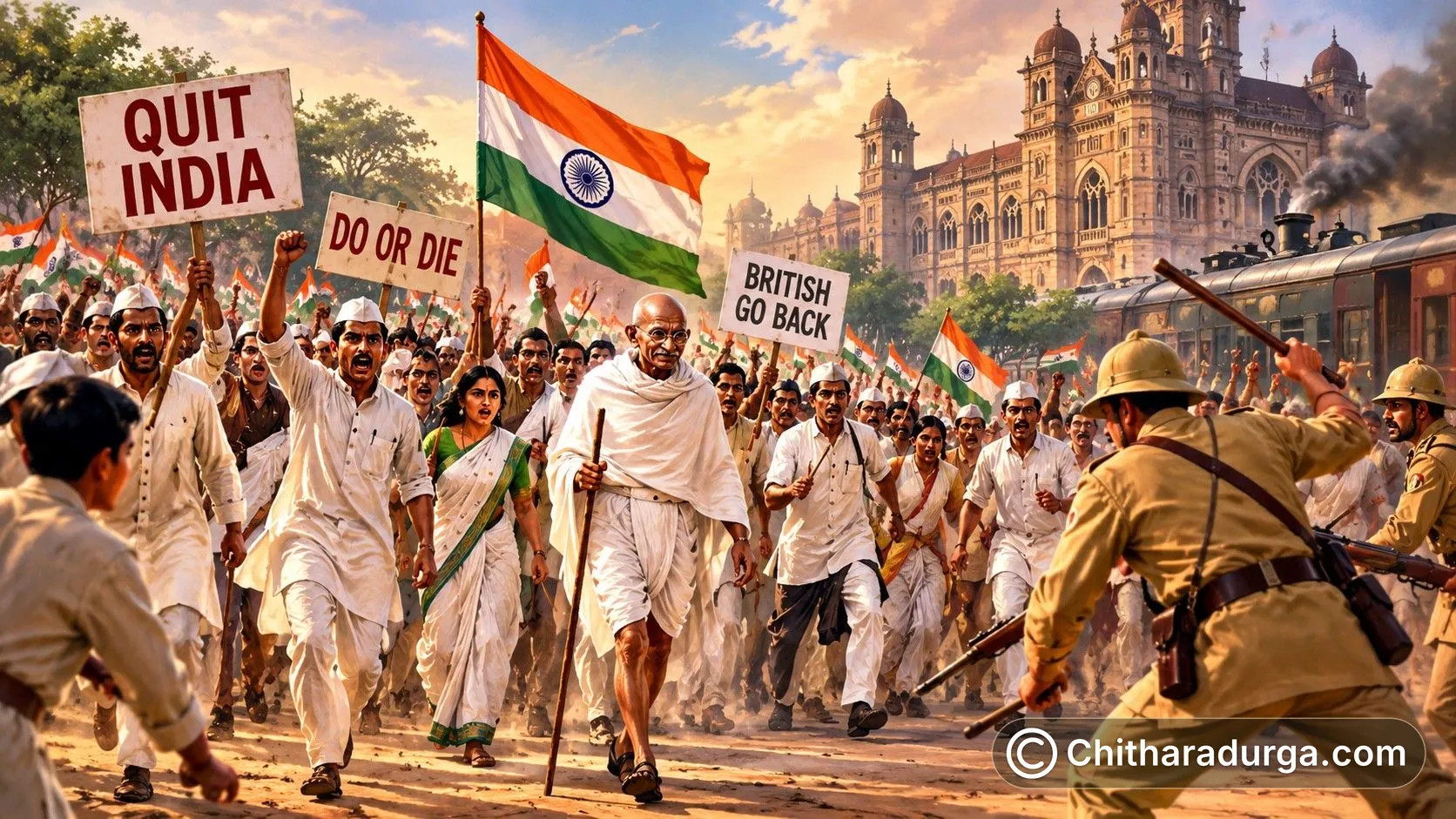
Chitradurga District during the Quit India Movement
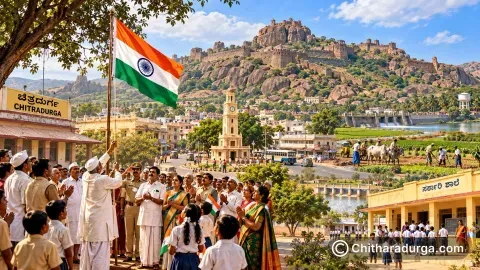
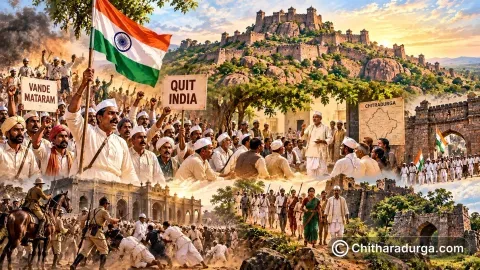
The Quit India Movement of 1942 was one of the most decisive phases of India's struggle for independence, and Chitradurga district was among the active centres of the movement in the then princely State of Mysore. Historical accounts of the freedom struggle in Karnataka identify Chitradurga alongside Mysore, Bangalore, Tumkur, Dharwad, Belgaum and other important centres where the movement generated considerable political activity.
The Call of 1942
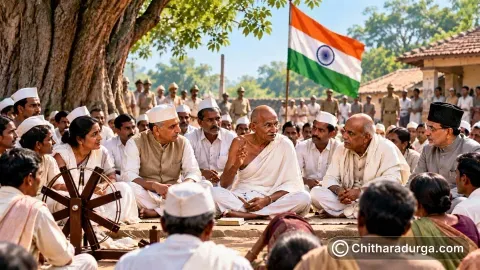
On 8 August 1942, the All India Congress Committee adopted the Quit India Resolution in Bombay. Mahatma Gandhi's historic "Do or Die" call inspired people across the country to intensify the struggle for complete independence. The arrest of Gandhi and other Congress leaders on 9 August triggered widespread protests and spontaneous resistance across India.
The message soon reached the towns and villages of the Mysore State, including Chitradurga. Nationalist ideas had already gained ground in the district through earlier Gandhian campaigns, Congress activities and local struggles.
Turuvanur and the Growth of Gandhian Activism
Turuvanur, in Chitradurga district, had emerged as an important centre of political and social activism even before the Quit India Movement. Inspired by Gandhi's campaign against liquor, local people participated in an anti-toddy movement in which toddy-producing trees were cut down as a form of protest.
The movement was led by S. Nijalingappa, who later became one of Karnataka's prominent political leaders. Women also participated in the campaign, and noted freedom fighter Bellary Siddamma was associated with the Turuvanur agitation. These earlier campaigns helped strengthen Gandhian and nationalist consciousness in the region.
S. Nijalingappa and the Quit India Movement
One of the most prominent personalities connected with Chitradurga's freedom struggle was Siddavanahalli Nijalingappa. He actively participated in the Quit India Movement and was imprisoned for his role in the struggle. His involvement linked Chitradurga closely with the wider national movement against British rule.
The movement was not confined to well-known political leaders. Students, villagers, local Congress workers, women and Gandhian activists contributed to spreading nationalist ideas and sustaining resistance at the grassroots level.
Youth and Students in the Movement
The Quit India Movement also inspired the younger generation of Chitradurga. Karnamadakal Sreenivasa Radhakrishna, born at Siddavanahalli in Chitradurga district, came from a Gandhian family and had been influenced by the ideals of Swaraj from childhood. While studying in Banaras, he participated in the Quit India Movement and was imprisoned in 1942.
Such participation demonstrated how the national movement had reached beyond major cities and influenced young people from the villages and smaller towns of Chitradurga.
Women and the Freedom Struggle
Women also played an important role in the nationalist activities associated with the region. Bellary Siddamma, who had earlier participated in the Turuvanur anti-toddy campaign, took an active role in the Quit India Movement. During this period she assisted underground freedom fighters while remaining under police surveillance.
Her contribution reflects the wider participation of women in Karnataka's freedom struggle, not only in public demonstrations but also in supporting activists and sustaining the movement behind the scenes.
A Chapter of Courage and National Awakening
The Quit India Movement strengthened political awareness in Chitradurga and added another chapter to the district's long tradition of resistance and courage. The struggle was no longer limited to demands for administrative reforms; the central objective had become complete independence from colonial rule.
For Chitradurga, the events surrounding 1942 connected its villages, students, women, political workers and local leaders with the nationwide struggle for freedom.
Legacy
Chitradurga's contribution to the Quit India Movement forms an important part of the district's modern history. The participation of leaders such as S. Nijalingappa, activists such as Bellary Siddamma, young freedom fighters and ordinary citizens demonstrated how deeply the desire for freedom had spread through the region.
The Quit India Movement of 1942 therefore remains a significant milestone in Chitradurga's journey towards Independence — a period when the district's historic tradition of courage found a new expression in the national struggle for a free India.