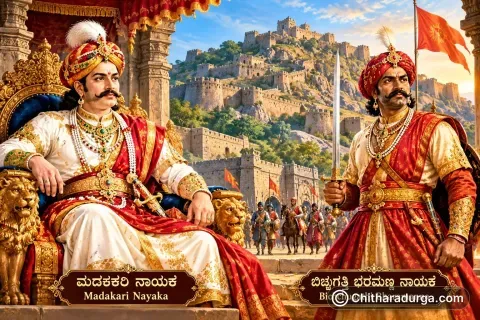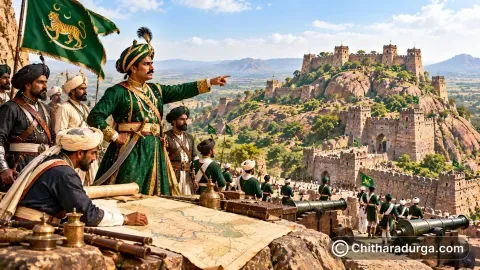
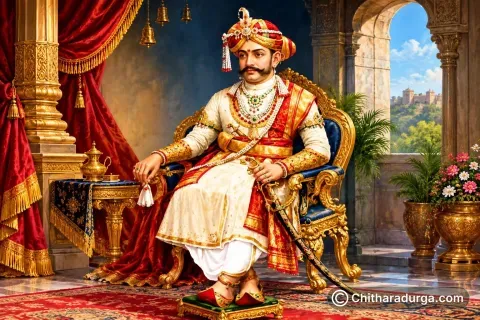
Among the many rulers whose stories are carved into the rocky landscape of Chitradurga, few occupy a place as powerful as Madakari Nayaka V, the last ruler of the Chitradurga Nayakas.
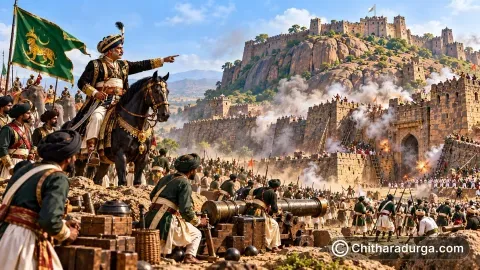
His reign marked both the height of Chitradurga's struggle for political survival and the final chapter of a Nayaka kingdom that had dominated the region for generations. From the massive walls of Chitradurga Fort, Madakari Nayaka attempted to preserve his kingdom while two powerful forces—the Marathas and Hyder A
The capture of Chitradurga by Hyder Ali in 1779 was one of the most decisive events in the history of central Karnataka. It brought an end to the long rule of the Chitradurga Nayaka dynasty and incorporated the strategically important Chitradurga region into the expanding Kingdom of Mysore.
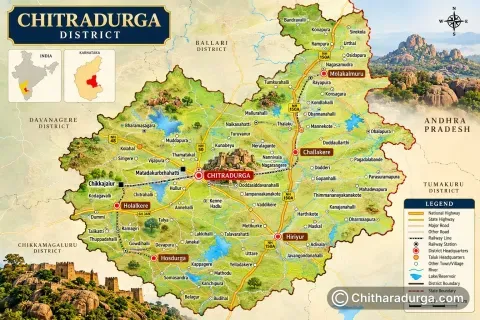
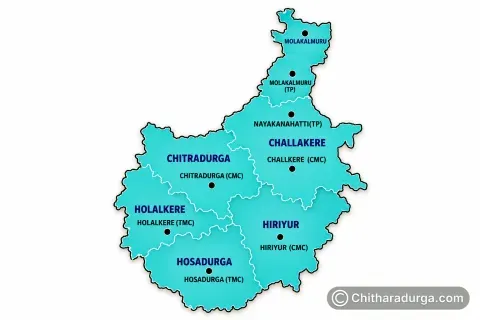
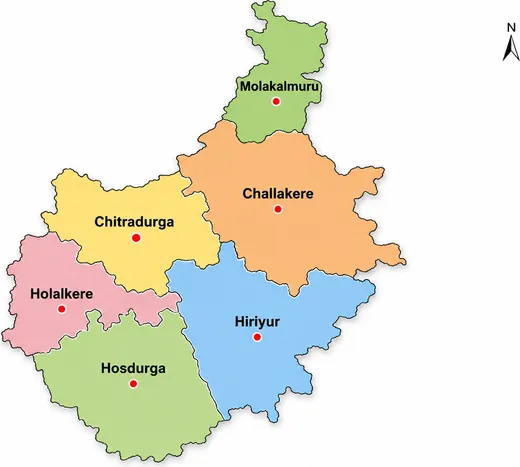
Chitradurga District, located in central Karnataka, is administratively divided into six taluks — Chitradurga, Challakere, Hiriyur, Holalkere, Hosadurga and Molakalmuru. Together, these taluks cover the district's total geographical area of approximately 8,436 square kilometres and form an important link between the district administration and villages.
The Nayakas of Chitradurga played a major role in shaping the political, military and cultural history of central Karnataka. Emerging during the period of the Vijayanagara Empire, the Nayakas gradually established Chitradurga as a powerful regional principality. Over successive generations, they strengthened the famous Chitradurga Fort, developed settlements, encouraged agriculture and water conservation, supported temples and local institutions, and defended their territory against neighbouring
Urban administration plays an important role in the development and day-to-day management of towns and cities across Chitradurga District. While Gram Panchayats and other Panchayat Raj institutions serve rural areas, urban settlements are administered through Urban Local Bodies (ULBs) constituted under Karnataka's municipal administration system.
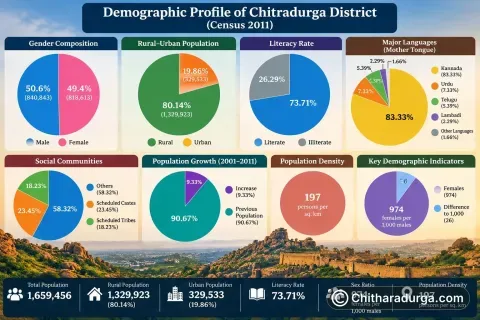
Chitradurga District has a diverse population shaped by its long history, predominantly rural economy, agricultural traditions, border-region cultural influences and steadily developing urban centres. Spread across six taluks — Chitradurga, Challakere, Hiriyur, Holalkere, Hosadurga and Molakalmuru — the district brings together communities with different occupations, traditions, languages and ways of life.
The history of Chitradurga is not confined to its magnificent seven-walled fort, the valour of the Nayaka rulers and the battles fought for the land. Equally important is its rich spiritual, religious, social and cultural heritage shaped over centuries by saints, Sharanas and religious institutions.
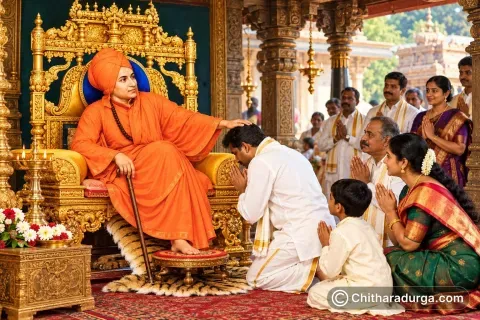
Among the institutions that have profoundly influenced the cultural life of Chitradurga is the Sri Jagadguru Murugharajendra Brihanmatha, popularly known as Murugha Matha.
The history of Tipu Sultan and Chitradurga belongs to an important period of political and military change in Karnataka during the late eighteenth century. Chitradurga, which had flourished for generations under its powerful Nayaka rulers, became part of the expanding Mysore kingdom in 1779, when Hyder Ali, father of Tipu Sultan, captured the famous Chitradurga Fort from the last Nayaka ruler, Madakari Nayaka V.
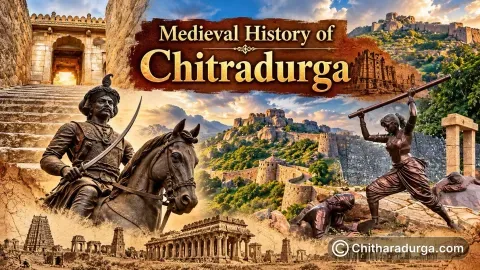
The medieval history of Chitradurga is marked by the rule and influence of several powerful South Indian dynasties, the growth of fortified settlements, and the eventual rise of the Chitradurga Nayakas (Palegars). Its strategic location in central Karnataka and its naturally protected rocky landscape made Chitradurga an important military and administrative centre for centuries.