Medieval History of Chitradurga
Medieval History of Chitradurga
The medieval history of Chitradurga is marked by the rule and influence of several powerful South Indian dynasties, the growth of fortified settlements, and the eventual rise of the Chitradurga Nayakas (Palegars). Its strategic location in central Karnataka and its naturally protected rocky landscape made Chitradurga an important military and administrative centre for centuries.
Chitradurga under Medieval Dynasties
During the medieval period, the Chitradurga region came under the influence of different ruling powers, including the Rashtrakutas, Chalukyas, Hoysalas and later the Vijayanagara Empire. These dynasties contributed to the political, cultural and religious development of the region. Temples, settlements, trade routes and local administrative centres developed across the district during different periods.
The rocky hills surrounding Chitradurga also provided excellent natural defence. Over time, these geographical advantages helped transform the region into an important fortified centre.
Chitradurga under the Vijayanagara Empire
The rise of the Vijayanagara Empire in the 14th century brought major political changes to central Karnataka. Chitradurga became part of the wider Vijayanagara political system, under which local military chiefs known as Nayakas or Palegars were entrusted with administration, revenue collection and defence.
The early Chitradurga Nayakas emerged within this military-administrative tradition. They gradually strengthened their authority over Chitradurga and the surrounding territories.
Rise of the Chitradurga Nayakas
Following the weakening of Vijayanagara, particularly after the Battle of Talikota in 1565, regional Nayakas became increasingly independent. The Chitradurga Palegars consolidated their territories and established themselves as an important regional ruling house.
Timmanna Nayaka is traditionally regarded as the founder of the Chitradurga Nayaka line. Successive rulers expanded and strengthened their kingdom, developed administrative systems and improved the defences of Chitradurga Fort.
Among the prominent rulers were Bichchugatti Bharamanna Nayaka, Hiri Madakari Nayaka and Madakari Nayaka V. Under the Nayakas, Chitradurga developed into a powerful fortified state in central Karnataka.
Chitradurga Fort and Military Strength
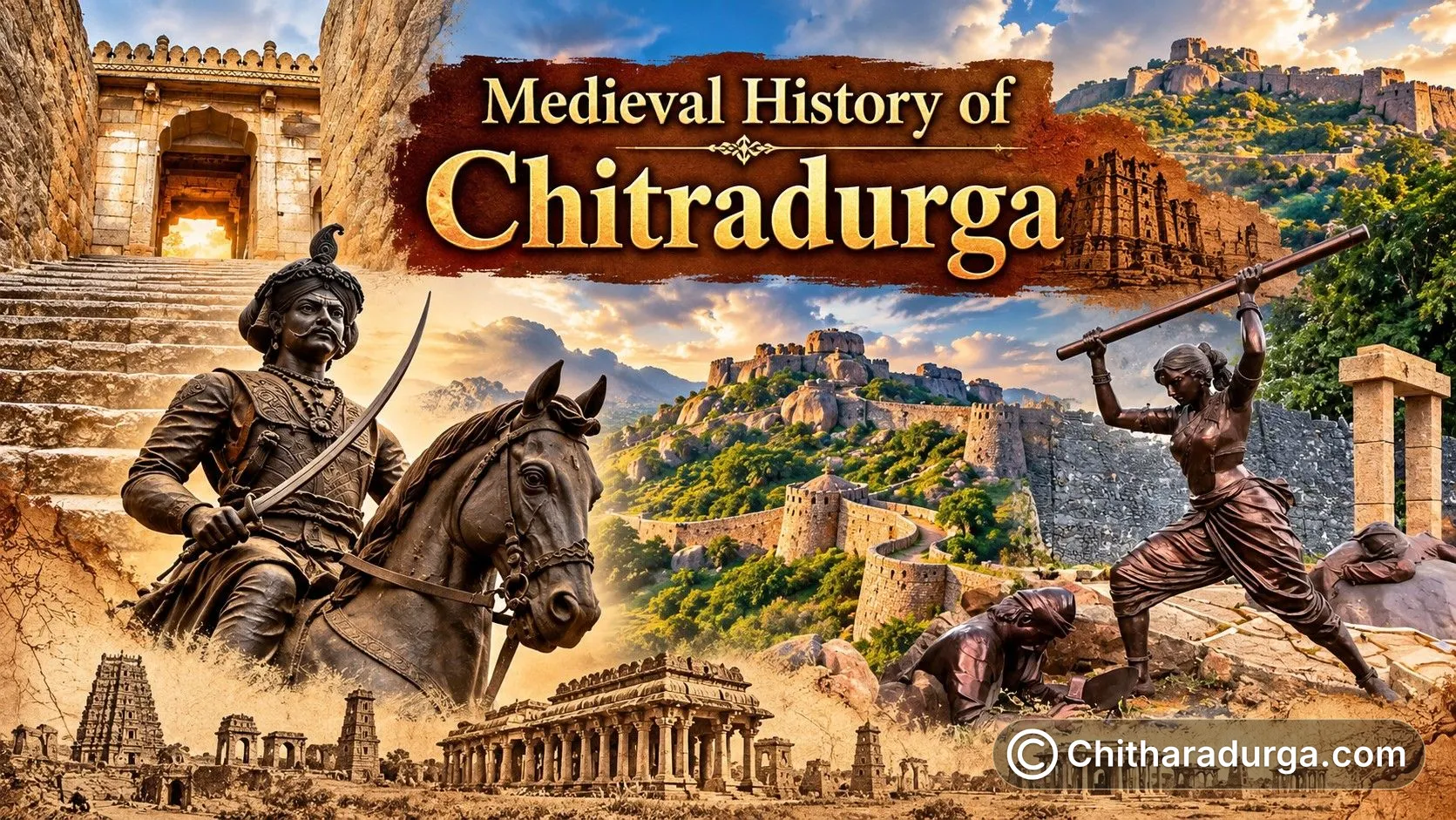
The magnificent Chitradurga Fort, popularly known as Kallina Kote and Yelu Suttina Kote, became the heart of the Nayaka kingdom. Built and strengthened over different periods, the fort used massive granite hills, narrow passages, gateways, watchtowers, reservoirs and defensive walls to create a formidable military stronghold.
The Nayakas faced conflicts with neighbouring Palegars and larger regional powers. Their ability to defend the rocky fortress became an important part of Chitradurga's military reputation.
Madakari Nayaka and Hyder Ali
The final phase of independent Nayaka rule was dominated by conflicts with Hyder Ali of Mysore. During the reign of Madakari Nayaka V, Chitradurga faced repeated military pressure from Mysore.
The legendary story of Onake Obavva, who is remembered for courageously confronting enemy soldiers attempting to enter the fort through a narrow passage, belongs to this turbulent period and remains one of Chitradurga's most celebrated traditions of bravery.
In 1779, Hyder Ali finally captured Chitradurga Fort. The defeat of Madakari Nayaka brought the independent rule of the Chitradurga Nayakas to an end and incorporated the region into the expanding Mysore state.
Legacy of Medieval Chitradurga
The medieval period shaped much of Chitradurga's historical identity. The rise of the Palegars, the development of the great fort, repeated wars and resistance against powerful enemies transformed Chitradurga into a celebrated land of valour.
The massive fortifications, temples, gateways, water systems, inscriptions and local traditions that survive today preserve the memory of this remarkable era. Above all, the Chitradurga Nayakas and figures such as Madakari Nayaka, Bichchugatti Bharamanna Nayaka and Onake Obavva continue to symbolize the courage, resilience and heritage of Chitradurga.