Education System in Chitradurga District during the British Period
Education System in Chitradurga District during the British Period
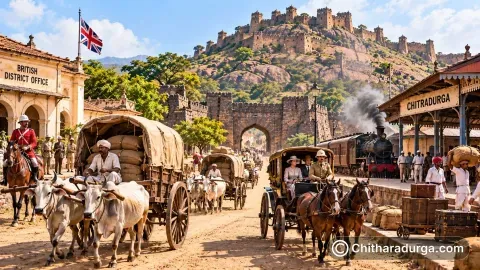
The British period was an important phase in the transformation of the education system in Chitradurga district. During the nineteenth and early twentieth centuries, education gradually moved from traditional village-based learning towards a more organised system of primary schools, government-supported institutions, examinations and formal curricula.
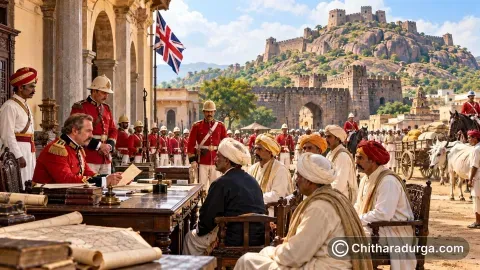
Chitradurga was part of the Mysore State, and therefore its educational development was closely connected with the policies of the Mysore administration. From 1831 to 1881, Mysore was directly administered by British Commissioners. After the Rendition of 1881, the Wadiyar rulers governed the Princely State of Mysore under British paramountcy.
Traditional Education
Before the expansion of modern schools, education in Chitradurga was largely provided through traditional institutions and local teachers.
Village schools, religious centres, temples, mathas and private teachers played an important role in elementary learning. Students were generally taught reading, writing, arithmetic, religious literature and traditional knowledge.
Kannada was important in local education, while Sanskrit learning was associated particularly with religious and scholarly studies.
Educational opportunities, however, were limited. Rural poverty, social inequalities, long distances between settlements and the need for children to assist their families in agriculture restricted access to schooling.
Introduction of Modern Education
During the nineteenth century, a more organised educational system gradually developed in Mysore State.
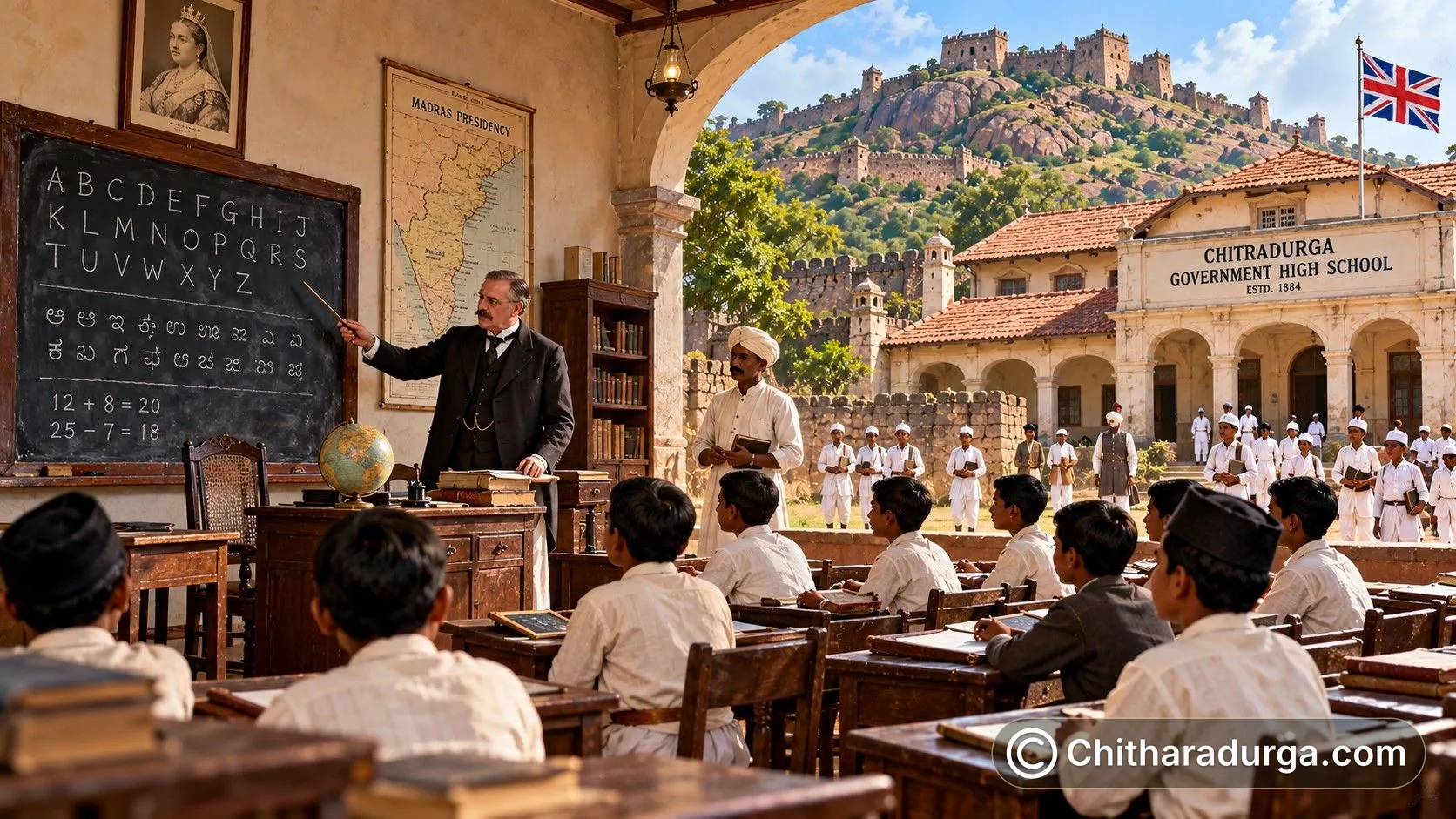
Under British administration, greater attention was given to establishing schools, introducing structured curricula and creating systems for inspecting and supervising educational institutions.
Primary education slowly expanded beyond traditional learning centres. Subjects such as language, arithmetic, history, geography and basic sciences gradually became part of formal education.
Government involvement also brought greater emphasis on school records, examinations and trained teachers.
Growth of Primary Schools
Primary education formed the foundation of the developing school system in Chitradurga.
Schools gradually appeared in important towns and larger villages. Children were taught basic literacy, numeracy and general subjects that were increasingly standardised by the education authorities.
However, educational facilities remained unevenly distributed. Students living in remote villages often had to travel considerable distances to attend school, and many children continued to remain outside the formal education system.
Secondary and Higher Education
Compared with primary schooling, opportunities for secondary education were more limited during much of the British period.
Students seeking advanced education often had to travel to larger towns or educational centres elsewhere in Mysore State. Over time, secondary schools and more advanced educational facilities gradually became available in important towns.
English education also gained importance, particularly for those seeking employment in government offices, administration and professional occupations.
However, English-medium or advanced education remained accessible to a relatively small section of the population during the earlier decades.
Education of Girls
One of the important social changes of the nineteenth and early twentieth centuries was the gradual expansion of girls' education.
Initially, formal education for girls was very limited, particularly in rural areas. Social customs, poverty and lack of nearby schools restricted female education.
Gradually, changing social attitudes, government initiatives and the efforts of reformers and educational organisations encouraged more girls to attend school.
Although progress was slow, the expansion of female education became an important step in the social transformation of the district.
Role of Mathas and Local Institutions
Traditional religious and social institutions continued to play an important role in education even as modern schooling expanded.
Mathas, temples, community organisations and local philanthropists supported learning in different parts of the district. Some provided religious instruction, while others contributed to general education, student accommodation and the establishment of schools.
Thus, the educational system of Chitradurga during this period developed through a combination of traditional institutions and the emerging modern school system.
Education and Rural Society
Chitradurga was predominantly rural and dependent on agriculture. This created particular challenges for education.
Many families required children to help with farming, livestock and household work, which affected regular school attendance. Drought, poverty and poor transport facilities also made education difficult for children in remote areas.
Despite these difficulties, the gradual spread of schools helped literacy and formal learning reach a wider section of society.
Education and Social Awareness
The spread of education had effects beyond literacy.
Schools, newspapers, books and public discussions helped expose educated people to new ideas concerning social reform, representative government, nationalism and public service.
By the early twentieth century, educational development contributed to growing political and social awareness in Chitradurga. Teachers, writers and students became increasingly involved in intellectual and public life.
The influence of Gandhian ideas later encouraged interest in basic education, rural upliftment, social equality, self-reliance and service to society.
Education and the Freedom Movement
Education also contributed indirectly to the growth of the freedom movement in the district.
As literacy and political awareness increased, students and teachers became more familiar with national developments. Ideas of Swadeshi, Swaraj, Khadi and responsible government reached educated sections of society and gradually spread into rural areas.
Figures associated with the wider Chitradurga region, including Siddavanahalli Krishna Sharma, S. Nijalingappa and other Gandhian activists, reflected the growing connection between education, social reform and national consciousness.
Towards Independence
By the time India achieved independence in 1947, Chitradurga's educational system had changed considerably from that of the early nineteenth century.
Traditional village learning had not disappeared, but it was increasingly supplemented by government-recognised primary and secondary schools, formal curricula, examinations, teacher-based classroom education and administrative supervision.
Access to education was still far from universal, particularly in remote rural communities and among disadvantaged sections of society. Nevertheless, the foundations for the later expansion of public education in independent Karnataka had been established.
Legacy
The British and Princely Mysore periods marked an important transition in the educational history of Chitradurga.
The district gradually moved from a system centred mainly on traditional and community-based learning towards a more structured network of modern schools. The expansion of literacy and formal education contributed not only to employment and administration but also to social awareness, reform movements and political consciousness.
From village schools and traditional centres of learning to organised primary and secondary education, the British-era educational transformation laid an important foundation for the growth of modern education in Chitradurga district after Independence.