Transport in Chitradurga during the British Period
Transport in Chitradurga during the British Period
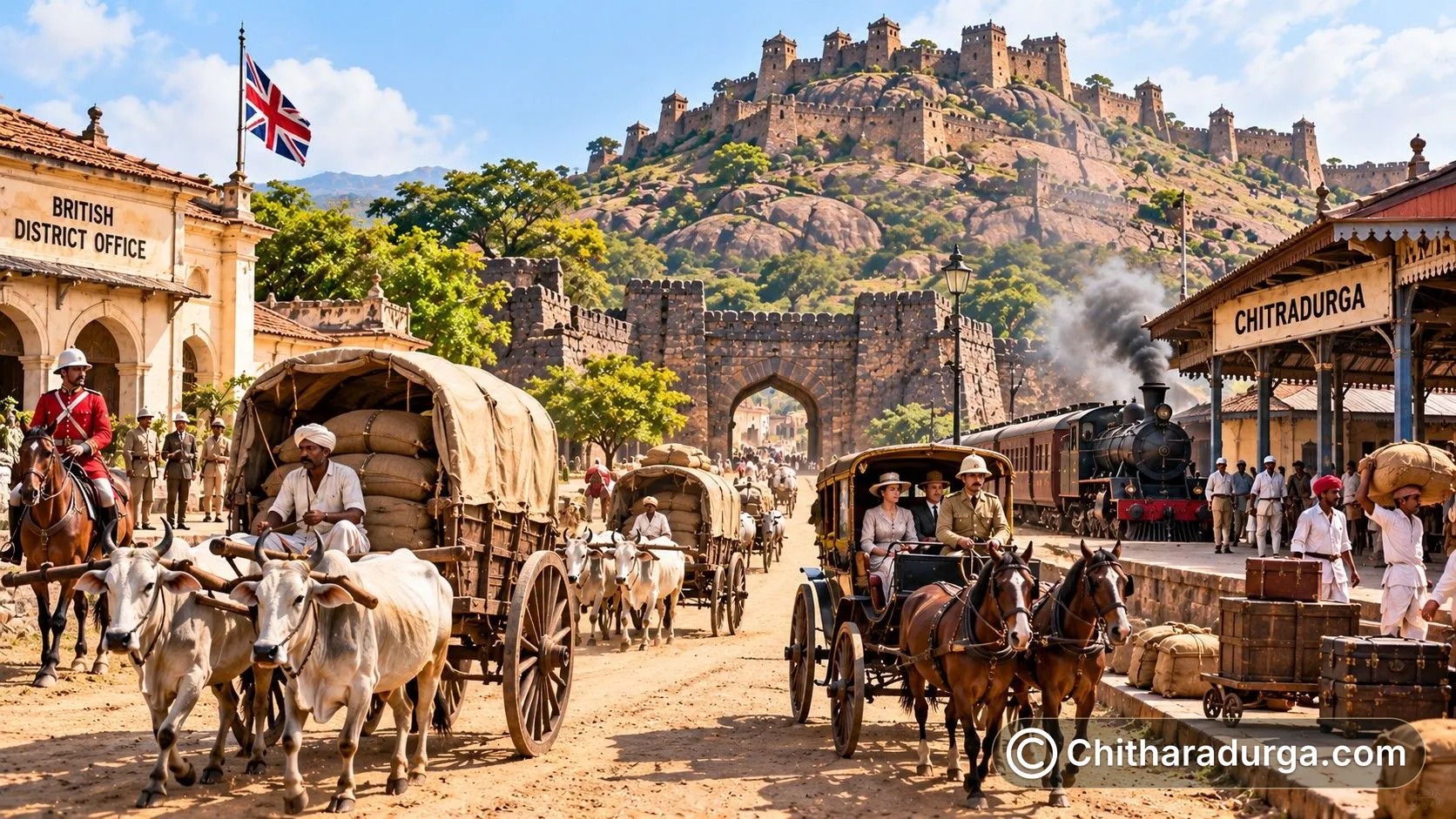
The British period marked an important stage in the development of transport and communication in Chitradurga. Before modern roads and motor vehicles became common, people largely depended on bullock carts, horse-drawn transport, pack animals and walking for travel and the movement of goods.
As administrative requirements, trade and communication increased during the nineteenth and early twentieth centuries, roads were gradually improved and new transport links developed. However, Chitradurga's transport development must be understood within the broader history of the Princely State of Mysore, particularly after the restoration of Wadiyar rule in 1881.
Traditional Modes of Transport
During the early nineteenth century, most villages in the Chitradurga region were connected by simple tracks and unpaved roads.
Bullock carts were the most important means of transporting agricultural produce and other goods. Horses and pack animals were also used, while most ordinary people travelled on foot for shorter distances.
Farmers and traders used carts to carry food grains, oilseeds, cotton, livestock products and other commodities between villages, weekly markets and larger trading centres.
Transport became particularly difficult during the rainy season because many rural roads were not properly surfaced.
Development of Roads
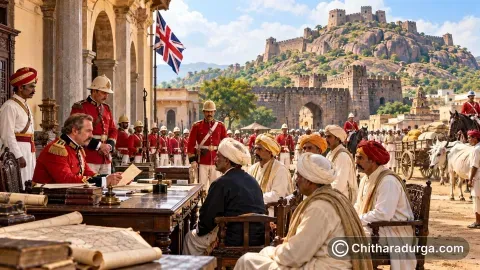
During the period of direct British administration of Mysore from 1831 to 1881, greater attention was gradually given to improving roads for administrative and commercial purposes.
Roads helped government officials travel between district and taluk headquarters and also supported the movement of mail, goods and people.
Over time, Chitradurga became better connected with important regional centres such as Bengaluru, Tumakuru, Davanagere, Shivamogga and Ballari regions through expanding road networks.
These routes helped connect local markets with larger commercial centres.
Roads and Trade
Improved roads played an important role in Chitradurga's agricultural economy.
The district produced commodities such as millets, pulses, oilseeds and cotton, which had to be transported from rural areas to markets. Better road connections made it easier for merchants to collect agricultural produce and carry it to larger trading centres.
Market towns consequently became increasingly important as centres where agricultural goods were bought, sold and transported.
The improvement of transport gradually reduced the isolation of some rural areas and strengthened economic links between villages and towns.
Arrival of Railway Transport
The expansion of railways in southern India transformed long-distance transport during the late nineteenth and early twentieth centuries. Railway development in the wider Mysore region created new connections between important commercial and administrative centres.
Railway connectivity eventually reached parts of the Chitradurga region, providing an alternative to the much slower bullock-cart transport for longer journeys.
Railways made it easier to transport passengers, agricultural produce, commercial goods and mail over greater distances.
However, road transport continued to remain extremely important because many villages were located far from railway stations.
Postal and Communication Transport
Transport development was closely connected with the growth of the postal system.
Before modern electronic communication, letters and official documents had to be physically carried between towns and villages. Postal runners, horse transport and later road and railway services were used to move mail.
The expansion of postal facilities helped government offices, merchants and ordinary citizens communicate with distant places more efficiently.
Later, the introduction of telegraph and other communication facilities further improved administrative communication.
Public Works and Transport
Road construction and maintenance increasingly became an important responsibility of the Public Works Department and the Mysore administration.
Bridges, culverts and improved road surfaces were gradually developed along important routes. These improvements were particularly necessary for crossing seasonal streams and travelling during the monsoon.
After the Rendition of Mysore in 1881, the Wadiyar administration continued to expand public works and transportation infrastructure while Mysore remained a princely state under British paramountcy.
Beginning of Motor Transport
During the early twentieth century, motor vehicles gradually began appearing on the roads of Mysore State.
Cars were initially limited mainly to government officials and wealthier sections of society. Over time, buses, lorries and other motor vehicles began to supplement traditional bullock-cart and horse transport.
Motor transport considerably reduced travel time between towns and created new possibilities for passenger movement and commercial transportation.
Nevertheless, in many rural parts of Chitradurga, bullock carts continued to remain an essential means of transport well into the twentieth century.
Importance to Rural Chitradurga
The development of transportation had a significant impact on rural life.
Better connectivity enabled farmers to reach markets more easily, helped traders move commodities, improved access to government offices and allowed people to travel to educational and medical institutions.
Roads also helped connect smaller villages with taluk headquarters and Chitradurga town, gradually strengthening the administrative and economic integration of the district.
Transport towards the End of the British Era
By the time India became independent in 1947, Chitradurga's transport system had changed considerably compared with the beginning of the nineteenth century.
The region had moved from a transport network dominated almost entirely by footpaths, bullock carts and animal transport toward a mixed system consisting of improved roads, motor vehicles, postal routes and railway connections.
Modern transport infrastructure was still limited compared with later decades, particularly in remote villages, but the foundations of Chitradurga's modern transportation network had been established.
Legacy
The British and princely Mysore periods represented an important transitional phase in the transport history of Chitradurga.
Traditional bullock-cart routes gradually gave way to improved roads, railway links and motor transport. These developments strengthened trade, administration, communication and mobility, bringing villages and towns into closer contact with the wider Mysore region.
From bullock carts and village tracks to roads, railways and motor vehicles, the transport history of Chitradurga during this period reflects the district's gradual transition from traditional mobility to the beginnings of a modern transportation network.