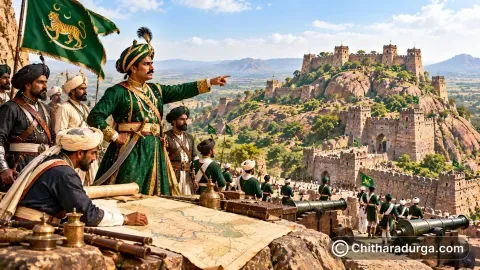
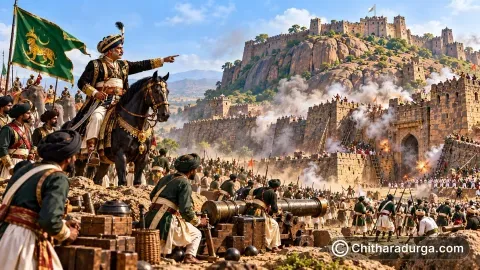
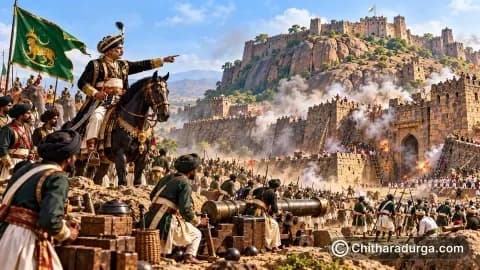
The capture of Chitradurga by Hyder Ali in 1779 was one of the most decisive events in the history of central Karnataka. It brought an end to the long rule of the Chitradurga Nayaka dynasty and incorporated the strategically important Chitradurga region into the expanding Kingdom of Mysore.
The history of Tipu Sultan and Chitradurga belongs to an important period of political and military change in Karnataka during the late eighteenth century. Chitradurga, which had flourished for generations under its powerful Nayaka rulers, became part of the expanding Mysore kingdom in 1779, when Hyder Ali, father of Tipu Sultan, captured the famous Chitradurga Fort from the last Nayaka ruler, Madakari Nayaka V.
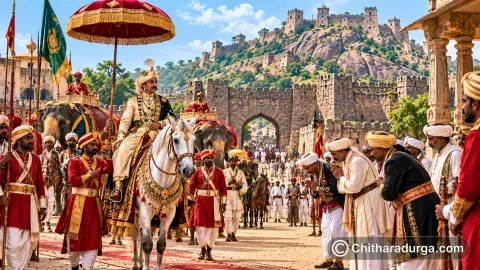
The history of Chitradurga during the Mysore Wodeyars period represents an important transition from the age of the Chitradurga Nayakas to a more centralised system of administration under the Mysore State. During the nineteenth and early twentieth centuries, Chitradurga gradually developed through changes in administration, agriculture, irrigation, education, transport and public institutions.
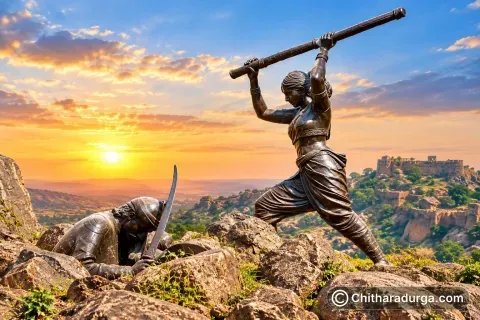
Onake Obavva is one of the most celebrated women in the history and folklore of Karnataka. Closely associated with the magnificent Chitradurga Fort, she is remembered for her extraordinary courage in defending the fort against enemy soldiers with nothing more than an onake—a traditional wooden pestle used for pounding grain.

 Mysore Period
 Raghavendra Padmashali