Kalyani Chalukyas in Chitradurga
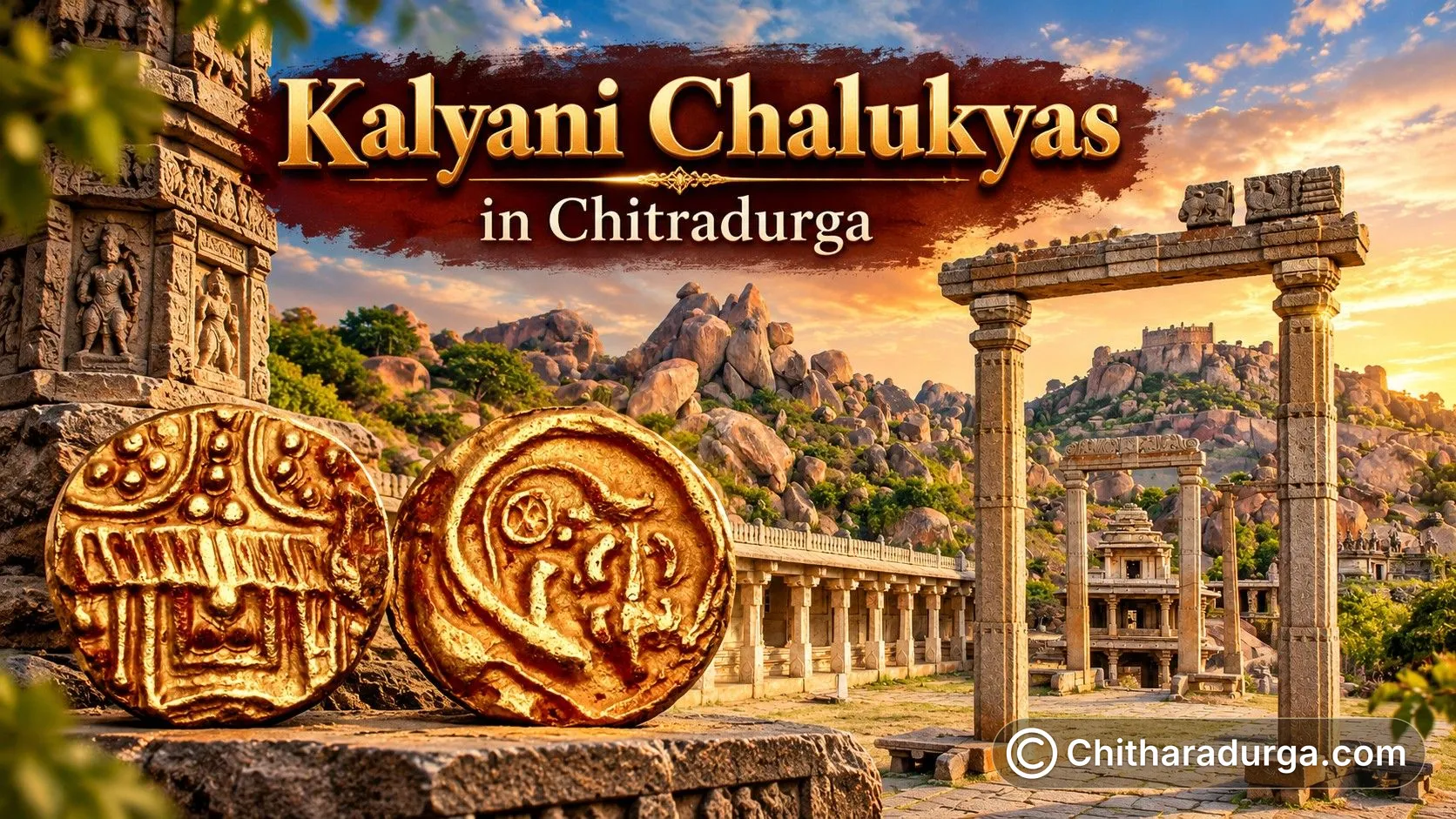
Kalyani Chalukyas in Chitradurga
The Kalyani Chalukyas, also known as the Western Chalukyas, were one of the major dynasties that influenced the medieval history of Karnataka. From the late 10th to the 12th century, their power extended across large parts of the Deccan, including areas that form the present-day Chitradurga district. Their period represents an important stage between the earlier Rashtrakuta era and the later rise of the Hoysalas.
Chitradurga under the Kalyani Chalukyas
After the decline of the Rashtrakutas, Tailapa II established the Kalyani Chalukya power in the late 10th century. With Kalyani, present-day Basavakalyan, as an important capital, the dynasty gradually established authority over extensive parts of Karnataka.
The Chitradurga region occupied an important position in central Karnataka. Its rocky terrain, agricultural settlements and routes connecting different parts of the Deccan gave it strategic importance. The region came under the wider political influence of the Kalyani Chalukyas and their subordinate chiefs.
Administration and Local Governance
The Kalyani Chalukyas governed their territories through a combination of royal authority and regional administration. Provinces and smaller territorial divisions were administered with the assistance of local chiefs, officers and village institutions.
Land revenue formed an important source of income, while grants of land were made to temples, religious establishments and individuals. Local administrative traditions helped villages and settlements continue to develop across the Chitradurga region.
Temples and Architecture
The Kalyani Chalukya period was an important phase in the development of Karnataka's temple architecture. Their architectural tradition formed a transition between the earlier Chalukyan styles and the highly decorative architecture that later flourished under the Hoysalas.
Temples of this period are known for carefully carved stone pillars, decorative doorways, sculptural panels and well-planned sanctums and halls. Medieval temples and architectural remains in and around the wider Chitradurga region reflect the broader artistic traditions that developed during this period.
Religion and Cultural Life
The Kalyani Chalukyas supported different religious traditions, including Shaivism, Vaishnavism and Jainism. Temples and religious institutions often functioned as centres of worship, learning, cultural activity and local economic life.
Kannada and Sanskrit literary traditions also flourished during the Western Chalukya period. Their age contributed significantly to the development of Karnataka's medieval cultural identity.
Agriculture, Irrigation and Economy
Agriculture was the foundation of the regional economy. Tanks, wells and other water-management systems played an important role in supporting cultivation in the semi-arid areas of central Karnataka. Land grants and the development of agricultural settlements contributed to the growth of villages and local markets.
Trade routes passing through central Karnataka also connected local settlements with larger commercial centres, encouraging the movement of agricultural produce, livestock and other goods.
Inscriptions and Historical Evidence
Inscriptions are important sources for understanding the Kalyani Chalukya period. They provide information about rulers, local chiefs, land grants, temples, taxes, villages and religious institutions. Such inscriptions and surviving monuments help historians reconstruct the political and social history of the Chitradurga region during the medieval period.
Legacy in Chitradurga
The Kalyani Chalukya period formed an important chapter in the historical development of Chitradurga. Their influence on administration, temple architecture, religious institutions, agriculture and local settlements helped shape the medieval character of the region.
As Kalyani Chalukya power weakened during the 12th century, new political forces gained strength in Karnataka. The Hoysalas subsequently expanded their influence into the region, followed in later centuries by the Vijayanagara Empire and the Chitradurga Nayakas. Thus, the Kalyani Chalukya period forms an important link in Chitradurga's long transition from early to later medieval history.