Sri S. Nijalingappa – Architect of Unified Karnataka
Sri S. Nijalingappa – Architect of Unified Karnataka
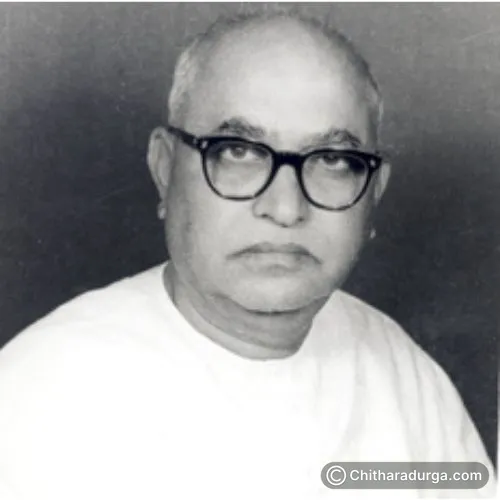
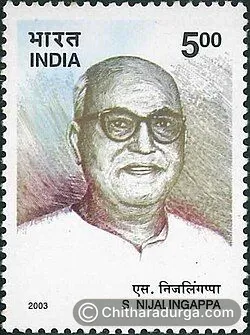
Sri Siddavanahalli Nijalingappa (10 December 1902 – 8 August 2000) was a freedom fighter, lawyer, statesman and one of the most influential political leaders in the history of Karnataka. He played an important role in India’s freedom struggle, the movement for the unification of Kannada-speaking regions, the formation of the unified Mysore State, and the political development of Karnataka in the decades following Independence. He also served as a member of India’s Constituent Assembly and later rose to become President of the Indian National Congress.
Early Life and Education
S. Nijalingappa was born on 10 December 1902 at Haluvagalu, then in Bellary district. He pursued higher education in Bengaluru and later studied law in Pune. After completing his legal education, he enrolled as an advocate in 1926.
His early years were shaped by the growing Indian nationalist movement. The writings of Annie Besant influenced his political awareness, while the ideas of Mahatma Gandhi and other national leaders encouraged him to become actively involved in the struggle for freedom.
Role in India's Freedom Struggle
Nijalingappa's public life was deeply connected with the Indian freedom movement. He participated in movements against British and princely-state rule and was imprisoned on several occasions, including in 1939, during 1942–44, and in 1947.
During the Forest Satyagraha of 1939, Nijalingappa participated in an agitation at Thuruvanuru and was arrested and sentenced to imprisonment. After his release, he continued his involvement in the national movement and participated in the period of the Quit India struggle.
His participation in the freedom movement demonstrated a commitment that extended beyond electoral politics. He belonged to a generation of leaders whose political careers were rooted in the struggle for Independence.
Member of the Constituent Assembly
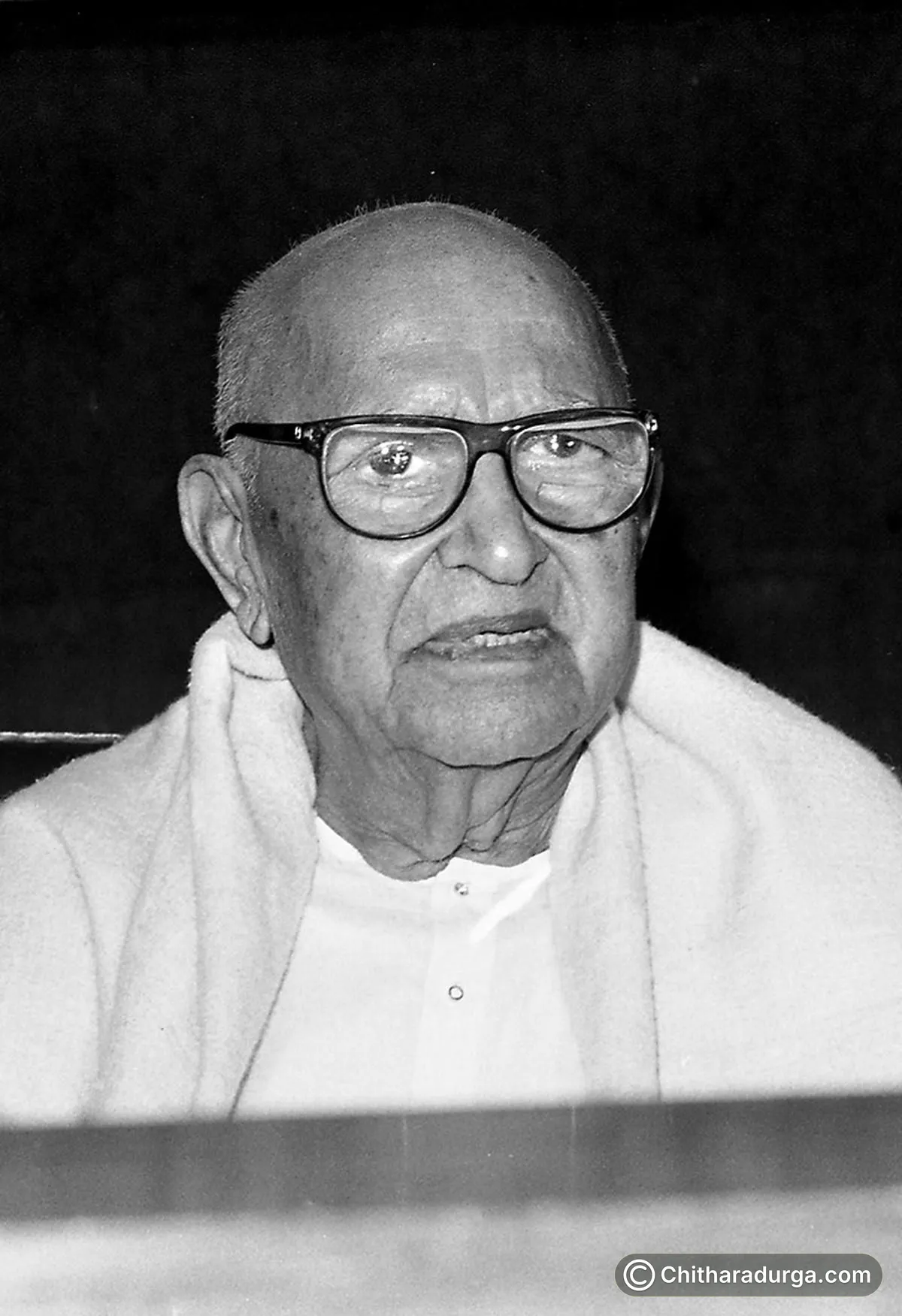
Nijalingappa also participated in the historic process of building independent India's democratic institutions. He was a member of the Constituent Assembly from 1946 to 1950, placing him among the representatives involved in India's transition from colonial rule to a constitutional republic.
He subsequently served in Parliament and represented Chitradurga in the Lok Sabha during the 1950s.
A Leader of the Karnataka Unification Movement
One of Nijalingappa's most important contributions was his involvement in the Karnataka Unification Movement, which sought to bring Kannada-speaking regions administered under different provinces and princely territories into a single state.
The reorganisation of states on linguistic lines in 1956 brought together Kannada-speaking areas into the enlarged Mysore State, which was later renamed Karnataka in 1973.
Nijalingappa emerged as one of the major political figures associated with this historic transformation and became Chief Minister of the newly unified state on 1 November 1956.
For this reason, his name occupies an important place in the history of the political and administrative integration of modern Karnataka.
Chief Minister of Mysore State
Sri S. Nijalingappa served as Chief Minister of Mysore State during two principal periods:
1 November 1956 – 16 May 1958
21 June 1962 – May 1968.
His years in government coincided with an important phase in the development of the newly reorganised state. His administration focused on areas such as agriculture, irrigation, electricity, industry, transportation and infrastructure.
Among the important development initiatives associated with his period in office was the Sharavathi hydroelectric project, which contributed significantly to Karnataka's power infrastructure. His administration also worked to improve irrigation and agricultural development.
His government also played a role in developing agricultural education. In 1963, during his tenure as Chief Minister, steps were taken toward establishing the University of Agricultural Sciences, Bangalore, including providing land for what became the Gandhi Krishi Vignana Kendra campus.
Support for Tibetan Refugees
Another notable chapter in Nijalingappa's public life was Karnataka's support for Tibetan refugees.
Following the arrival of Tibetan refugees in India, his government supported their rehabilitation by making land available for settlements in Karnataka. The state subsequently became home to some of India's most significant Tibetan settlements.
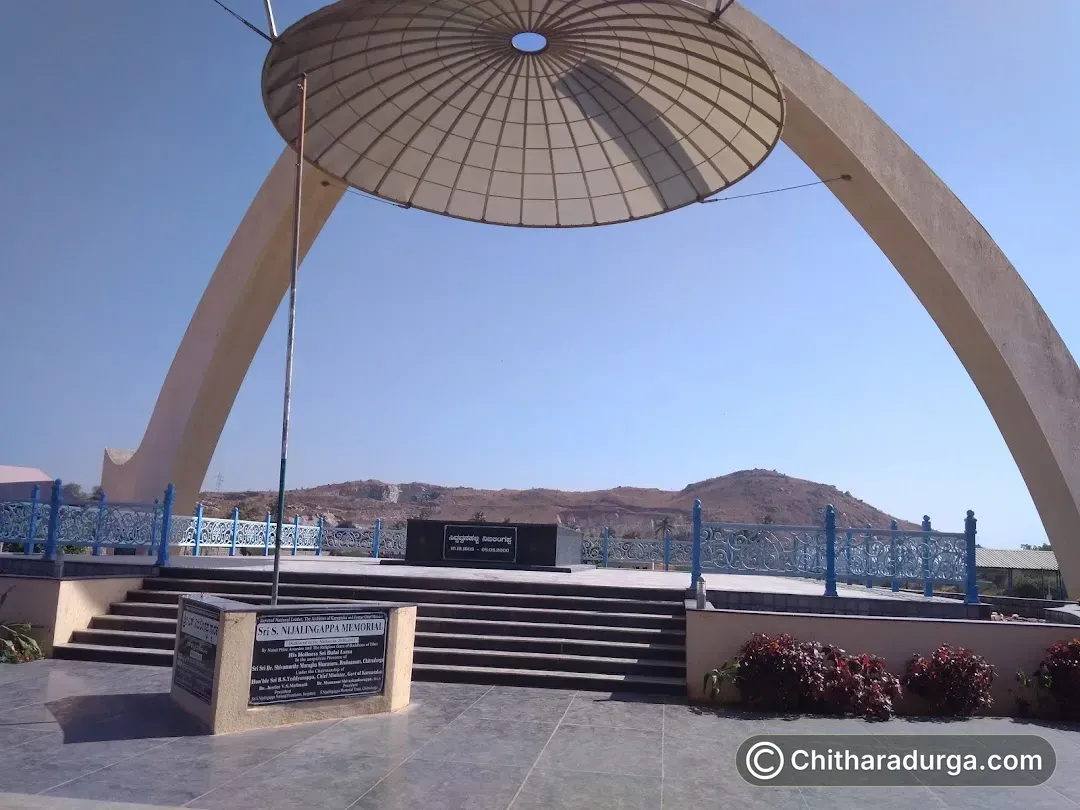
This association was remembered decades later when the Dalai Lama inaugurated the S. Nijalingappa memorial near Chitradurga in January 2011.
From Karnataka to National Politics
Nijalingappa's political influence eventually extended far beyond Karnataka.
After his years as Chief Minister, he moved into national-level leadership and became President of the Indian National Congress in 1968. His tenure came during one of the most turbulent periods in the history of the Congress party.
In 1969, serious political and organisational differences between the Congress leadership and Prime Minister Indira Gandhi culminated in the historic split of the party. Nijalingappa was one of the principal leaders of the organisational wing during this period.
Whatever the political disagreements of that era, his position at the centre of these events demonstrates the national importance he had acquired after beginning his public career in Karnataka.
Connection with Chitradurga
Sri S. Nijalingappa had a particularly strong association with Chitradurga.
He pursued part of his education in Chitradurga, became active in the region's public and political life, and represented Chitradurga in Parliament. His long connection with the district makes him an important figure not only in Karnataka's political history but also in the modern history of Chitradurga.
After withdrawing from active political life, he spent his later years in Chitradurga.
Simplicity and Public Life
Alongside his political achievements, Nijalingappa came to be remembered for a public image associated with simplicity, discipline and integrity. His career stretched from the freedom movement through the formation of modern Karnataka and into the highest levels of national politics.
His autobiography, My Life and Politics, records his experiences across these different phases of twentieth-century Indian political history.
Final Years and Legacy
Sri S. Nijalingappa passed away in August 2000 in Chitradurga, at the age of 97.
His life spanned an extraordinary period—from colonial India and the freedom struggle to Independence, the framing of the Constitution, the unification of Karnataka and the development of democratic government in the state.
Today, S. Nijalingappa is remembered particularly for his contribution to the freedom movement, Karnataka's unification, the administration and development of the newly unified state, and national political life.
His journey from a lawyer and freedom fighter to Chief Minister and national political leader remains an important chapter in the history of Karnataka.
A Life Connected with the Making of Modern Karnataka
Sri S. Nijalingappa belonged to the generation that had the difficult responsibility of both winning freedom and building institutions after freedom.
For the people of Chitradurga, his story has an additional significance. A leader closely associated with the district went on to participate in the Constituent Assembly, lead the unified Mysore State and occupy one of the most important organisational positions in Indian national politics.
His life therefore forms an inseparable part of the story of Chitradurga, Karnataka and modern India.