Madakari Nayaka – The Last Great Ruler of Chitradurga
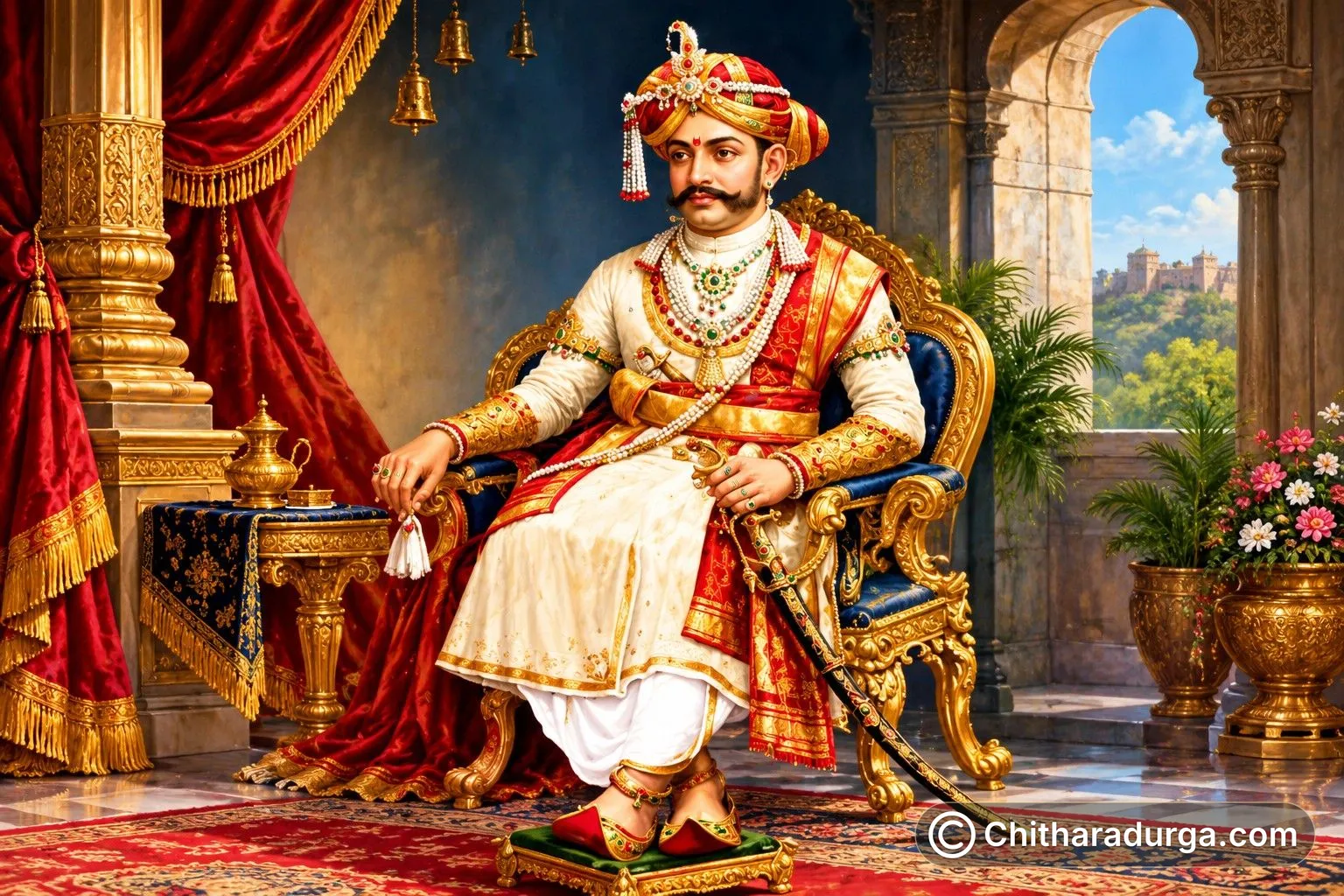
Madakari Nayaka occupies a distinguished place in the history of Karnataka as the last prominent ruler of the Nayaka dynasty of Chitradurga. Remembered for his courage, military leadership, determination, and devotion to his kingdom, he became a symbol of the heroic tradition associated with Chitradurga Fort.
The history of Madakari Nayaka is inseparable from the massive stone walls, gateways, watchtowers, temples, reservoirs and rocky landscape of Chitradurga. His reign represents both the height of Chitradurga's resistance and the dramatic final chapter of independent Nayaka rule in the region.
The Nayakas of Chitradurga
For generations, the Nayakas ruled Chitradurga and gradually transformed it into an important political and military centre. Situated amid naturally fortified rocky hills, Chitradurga offered exceptional defensive advantages. Successive rulers strengthened these natural defences with walls, gateways, bastions, secret passages and other military structures.
Among the rulers of this dynasty, Madakari Nayaka became particularly famous because he ruled during a turbulent period when powerful neighbouring states were competing for control of southern India.
He is generally known as Madakari Nayaka V, the last ruling Nayaka of Chitradurga.
A Kingdom Surrounded by Powerful Forces
Madakari Nayaka's reign was marked by constant political and military challenges. The eighteenth century was a period of rapidly changing alliances and conflicts in southern India. Regional rulers had to carefully balance diplomacy, military preparedness and political strategy.
Chitradurga was strategically important because of its formidable fort and its position connecting different parts of the Deccan and southern Karnataka.
Madakari Nayaka therefore had to protect not only his throne but also the political independence of Chitradurga.
Chitradurga Fort – The Heart of His Power
The magnificent Chitradurga Fort became the centre of Madakari Nayaka's military strength.
Spread across a rugged landscape of granite hills and enormous boulders, the fort was protected by several defensive enclosures and massive stone walls. Its narrow passages, gateways and elevated positions made attacks extremely difficult.
The fort was more than a military structure. It contained temples, water-storage systems, residential areas and facilities necessary for sustaining life during periods of conflict.
Under the Nayakas, Chitradurga developed into a fortified capital where the natural landscape and human engineering worked together as a powerful defence system.
The Legend of Onake Obavva
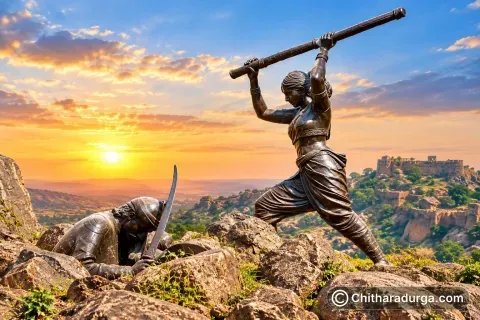
One of the most celebrated stories associated with Madakari Nayaka's period is that of Onake Obavva.
According to popular tradition, enemy soldiers discovered a narrow opening in the fortification, later remembered as Obavvana Kindi, and attempted to enter the fort secretly.
Obavva, the wife of a fort guard, noticed the intrusion. With remarkable courage, she confronted the infiltrating soldiers using an onake, a traditional wooden pestle used for pounding grain.
Her extraordinary bravery became one of Karnataka's most enduring stories of courage.
Today, Onake Obavva is remembered not merely as an individual heroine but as a symbol of ordinary people rising courageously to defend their homeland. Her story has become permanently connected with the history of Madakari Nayaka and Chitradurga Fort.
Conflict with Hyder Ali
The greatest challenge to Madakari Nayaka came from Hyder Ali of Mysore.
Recognising the strategic importance of Chitradurga, Hyder Ali sought to bring the fort and surrounding territory under Mysore's control. Chitradurga's strong defences and the resistance of the Nayakas made this a difficult objective.
The struggle between the two powers continued through a period of military and political confrontation.
Eventually, in 1779, Hyder Ali's forces succeeded in capturing Chitradurga Fort. Madakari Nayaka was defeated and taken prisoner.
The fall of Chitradurga brought the independent rule of the Nayakas to an end and marked a decisive turning point in the history of the region.
Madakari Nayaka as a Symbol of Resistance
Although Madakari Nayaka lost his kingdom, his historical reputation survived the defeat.
He came to represent the determination of a regional ruler who defended his territory against a much stronger expanding power. The rocky fort of Chitradurga, the military traditions of the Nayakas and the stories of people who defended the kingdom ensured that his memory remained alive.
His life also illustrates the uncertain political world of eighteenth-century southern India, when alliances could change rapidly and rulers had to combine courage with diplomacy and military strategy.
Legacy
Madakari Nayaka remains one of the most recognisable historical personalities associated with Chitradurga.
His legacy lives through Chitradurga Fort, local traditions, folklore, literature, theatre and historical narratives. Together with legendary figures such as Onake Obavva, he represents an era remembered for courage, loyalty, sacrifice and resistance.
Visitors walking through the enormous gateways and stone corridors of Chitradurga Fort are not merely observing an ancient monument. They are entering a landscape that witnessed political ambition, battles, sacrifice and the final struggle of the Nayakas.
The Last Chapter of the Nayaka Kingdom
The defeat of Madakari Nayaka in 1779 ended an important chapter in Chitradurga's political history. Yet the fall of the kingdom did not erase its legacy.
The fort still stands as a monumental reminder of the rulers who transformed Chitradurga into one of Karnataka's most impressive fortified centres.
Madakari Nayaka's story therefore goes beyond the biography of a king. It is the story of a kingdom determined to preserve its independence, a fort that became the shield of its people, and a society whose courage produced legends remembered for generations.
Madakari Nayaka remains an enduring symbol of the valour, resistance and historical pride of Chitradurga.