Brahmagiri & Ashoka Siddapura – Where Chitradurga Meets the Mauryan Age
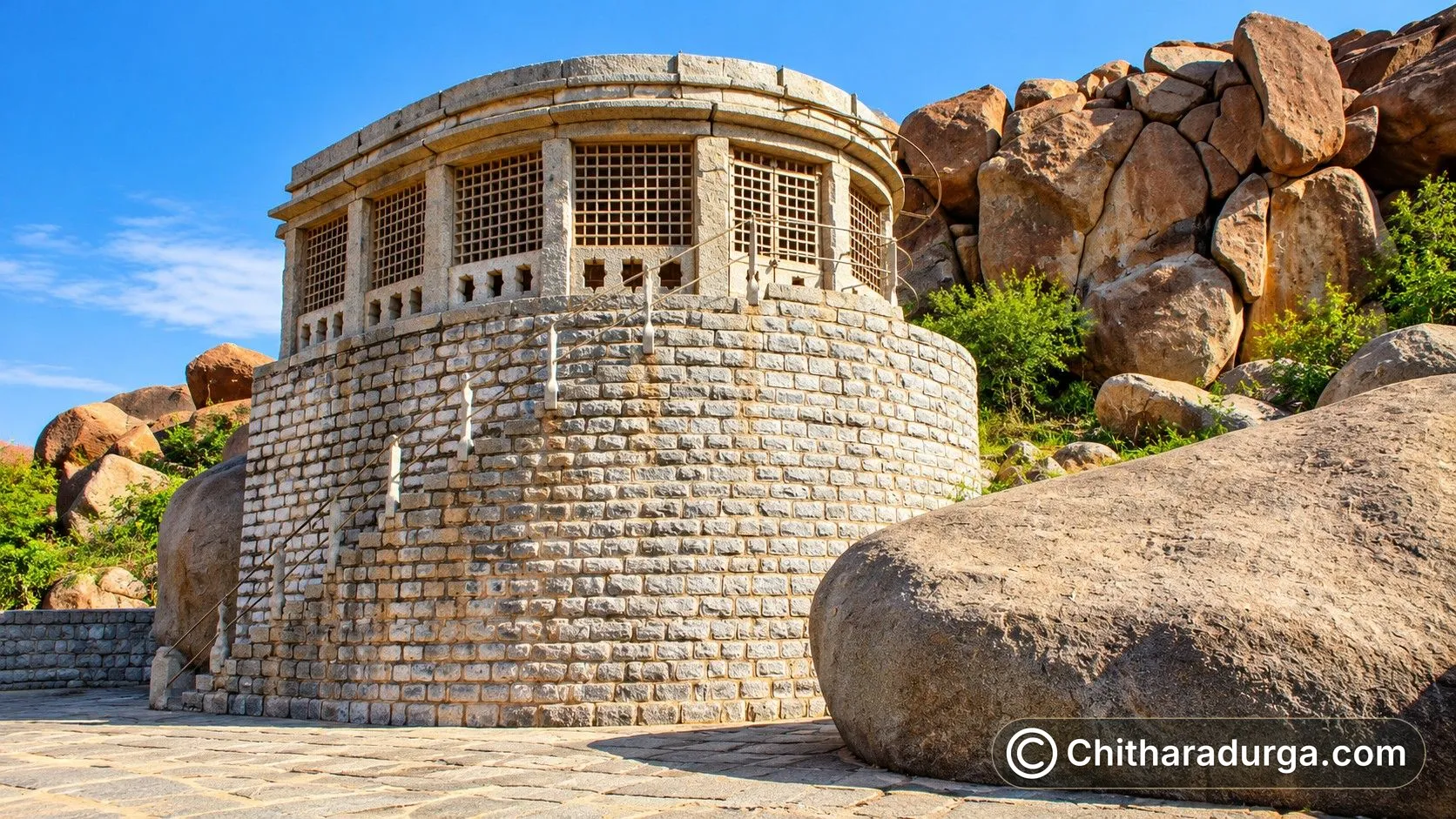
Brahmagiri & Ashoka Siddapura – Where Chitradurga Meets the Mauryan Age
Among the many historical treasures of Chitradurga district, Brahmagiri and Ashoka Siddapura hold a special place. Located near Molakalmuru in Chitradurga district, Karnataka, this region preserves archaeological evidence that connects the district with the Mauryan Empire and Emperor Ashoka, taking its recorded history back more than two thousand years.
Brahmagiri is particularly important because archaeological discoveries here reveal several phases of human occupation, ranging from prehistoric cultures to the early historic period. Nearby Ashoka Siddapura is famous for an Ashokan rock edict, providing direct evidence of Mauryan influence in this part of southern India.
Together, these places form one of the most fascinating archaeological landscapes of Chitradurga.
Brahmagiri – A Window into the Ancient Past
Brahmagiri is an important archaeological site situated in the northern part of Chitradurga district. The name Brahmagiri literally means "Hill of Brahma." At first glance, it may appear to be a quiet landscape of rocky hills and countryside, but beneath the soil lies evidence of communities that lived here thousands of years ago.
The site attracted the attention of archaeologists because of its ancient remains, including megalithic burial structures, pottery, stone objects, iron implements and other antiquities.
Archaeological investigations revealed that Brahmagiri was occupied during different cultural periods. The discoveries provide valuable information about the transition of human society in this region—from early agricultural and pastoral communities to Iron Age cultures and eventually to organised settlements of the early historic period.
Archaeological Excavations
Brahmagiri became particularly famous through archaeological excavations conducted under the direction of Sir Mortimer Wheeler in the 1940s.
The excavations helped establish an important cultural sequence for the archaeology of southern India. Different layers at the site revealed evidence belonging broadly to the Neolithic, Megalithic and Early Historic periods.
The Neolithic inhabitants used stone tools and pottery and practised agriculture and animal husbandry. Later communities adopted iron technology and developed distinctive burial traditions.
Among the most remarkable remains are the megalithic burials. Large stones were used in various forms to mark or construct burial places. Such monuments provide clues about the beliefs, social practices and funerary customs of the people who lived in the region long before the rise of many historically documented kingdoms.
Connection with Emperor Ashoka
The historical importance of the region becomes even greater because of its association with Emperor Ashoka, one of the greatest rulers of the Mauryan dynasty.
Ashoka ruled much of the Indian subcontinent during the 3rd century BCE. After embracing and promoting the principles of Dhamma, he caused messages concerning morality, compassion, proper conduct and responsibility to be engraved on rocks and pillars across his empire.
Ashokan inscriptions discovered in the Chitradurga region demonstrate that Mauryan political and cultural influence had extended deep into southern India.
The inscriptions are therefore much more than writings carved into stone. They are direct historical witnesses connecting present-day Chitradurga with one of the greatest empires of ancient India.
Ashoka Siddapura
Near Brahmagiri lies Ashoka Siddapura, another place of exceptional historical importance.
The site is associated with one of Ashoka's Minor Rock Edicts. The inscription belongs to the Mauryan period and reflects Ashoka's effort to communicate his ideas of Dhamma to people living across different regions of his realm.
The presence of such an inscription in this part of Karnataka shows that the area was connected with wider political, administrative and cultural networks more than two millennia ago.
The broader region is especially significant because Ashokan inscriptions found around Brahmagiri, Siddapura and Jatinga-Rameshwara collectively provide strong archaeological evidence for Mauryan presence in the area.
The Name "Isila"
One of the fascinating aspects of the Ashokan inscriptions of this region is the reference to Isila, an ancient administrative centre associated with the Mauryan system in the south.
The inscriptions indicate that officials connected with Isila were involved in communicating imperial instructions. Although scholars have discussed the precise identification and location of ancient Isila, the reference demonstrates the administrative importance of this region during Mauryan times.
It also shows that ancient Chitradurga was not an isolated landscape. It was connected to a much larger network of governance, communication, trade and cultural interaction.
Life Before the Mauryan Period
The importance of Brahmagiri does not begin with Ashoka.
Archaeological evidence shows that people had inhabited the region long before the Mauryan period. Communities gradually developed agriculture, domesticated animals, manufactured pottery and used increasingly sophisticated tools.
During the Iron Age, the region witnessed the emergence of megalithic traditions. The burial monuments left by these communities are among the most visible reminders of their presence.
Thus, Brahmagiri allows us to understand a long chapter of human development—from prehistoric settlements to communities that eventually became part of the historical world represented by inscriptions and organised states.
Importance to the History of Karnataka
Brahmagiri and Ashoka Siddapura occupy an important position in the archaeological history of Karnataka.
They help historians reconstruct the early history of the Deccan and provide evidence for contacts between northern and southern India during the Mauryan period. The sites also demonstrate that the Chitradurga region had developed settlements and cultural traditions centuries before many of the medieval dynasties for which Karnataka later became famous.
For students of archaeology, Brahmagiri is particularly valuable because several cultural phases can be studied within the same archaeological landscape.
A Heritage Beyond Chitradurga Fort
Chitradurga is widely celebrated for its magnificent fort, the Nayaka rulers, Madakari Nayaka and the legendary courage of Onake Obavva. But the history of the district stretches much further into the past.
Brahmagiri and Ashoka Siddapura take us back more than two thousand years—to the age of Emperor Ashoka and even further into prehistoric times.
These ancient sites remind us that Chitradurga has witnessed human civilisation through many different ages.
Brahmagiri's prehistoric settlements and megalithic burials, together with the Ashokan inscriptions of the surrounding region, make this landscape an invaluable part of Karnataka's heritage.
For anyone seeking to understand the deeper history of Chitradurga, Brahmagiri and Ashoka Siddapura are places where archaeology, history and the legacy of ancient India come together.