 By Raghavendra Padmashali
Chitradurga Fort – The Magnificent Stone Fortress of Karnataka
Rising dramatically among massive granite hills and boulders, Chitradurga Fort is one of Karnataka's most remarkable historical monuments. Popularly known as Kallina Kote—the Stone Fortress—and Yelu Suttina Kote—the Fort of Seven Circles—it represents centuries of military architecture, political history, engineering skill and legendary courage.
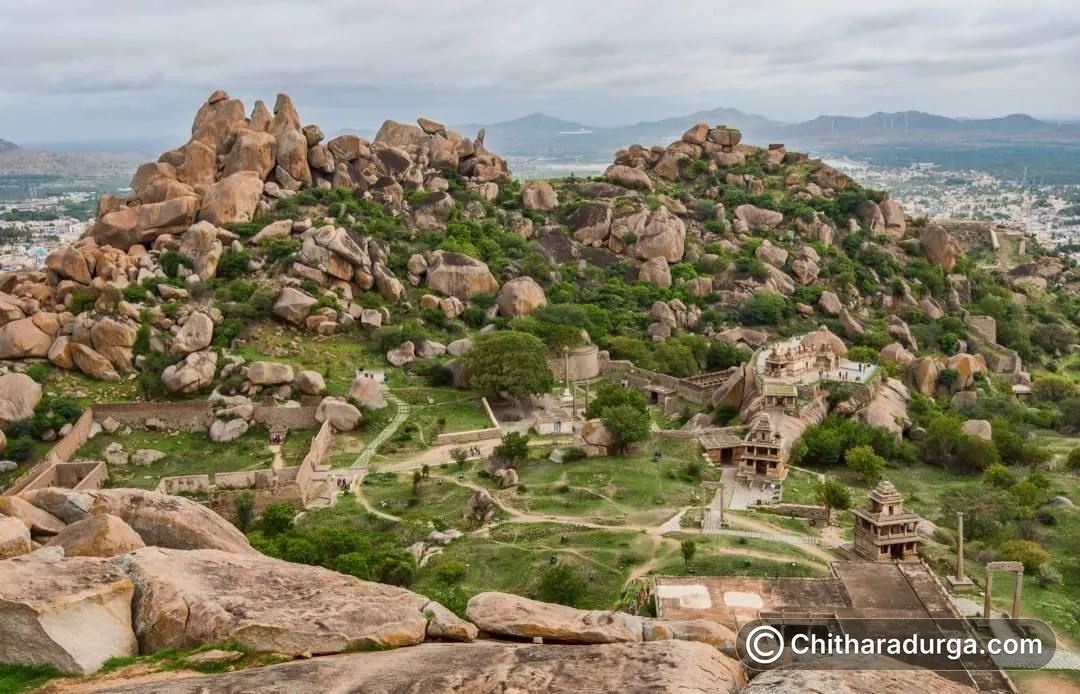
The fort is spread across a rugged hill landscape in the heart of Chitradurga city. Its seven defensive enclosures, massive gateways, watchtowers, temples, water-storage systems and secret passages demonstrate how effectively its builders combined natural rock formations with human engineering.
For the people of Chitradurga, the fort is more than an ancient monument. It is a powerful symbol of the district's history, courage and identity.
A Fort Shaped by Centuries of History
Chitradurga and its surrounding region passed through the influence of several important dynasties, including the Chalukyas, Rashtrakutas, Hoysalas and Vijayanagara rulers. The fortifications developed over different periods, but Chitradurga rose to particular political prominence under the Nayakas of Chitradurga, who ruled the region for more than two centuries and greatly strengthened the fortress.
The Nayakas transformed the rocky hills into an impressive military stronghold. After the decline of the Vijayanagara Empire, they consolidated their authority in the region and Chitradurga became the centre of their power.
Among the prominent rulers associated with this period were Bharamappa Nayaka and the Madakari Nayakas. The final major ruler was Madakari Nayaka V, whose reign ended when Hyder Ali captured Chitradurga in 1779.
Yelu Suttina Kote – Seven Lines of Defence
The most celebrated feature of Chitradurga Fort is its system of seven concentric fortifications.
This gave rise to the Kannada name Yelu Suttina Kote, meaning “Fort of Seven Circles.”
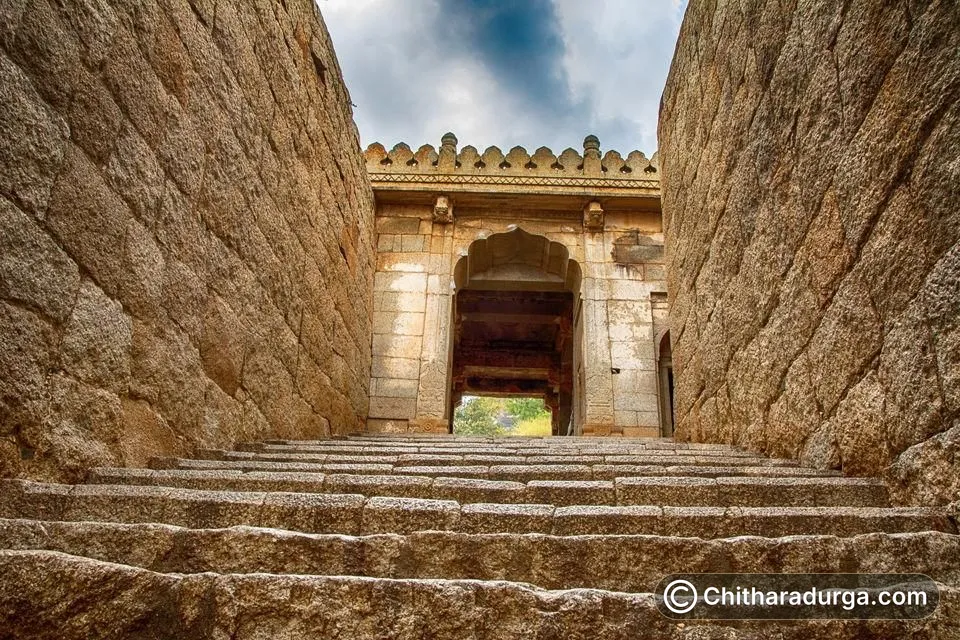
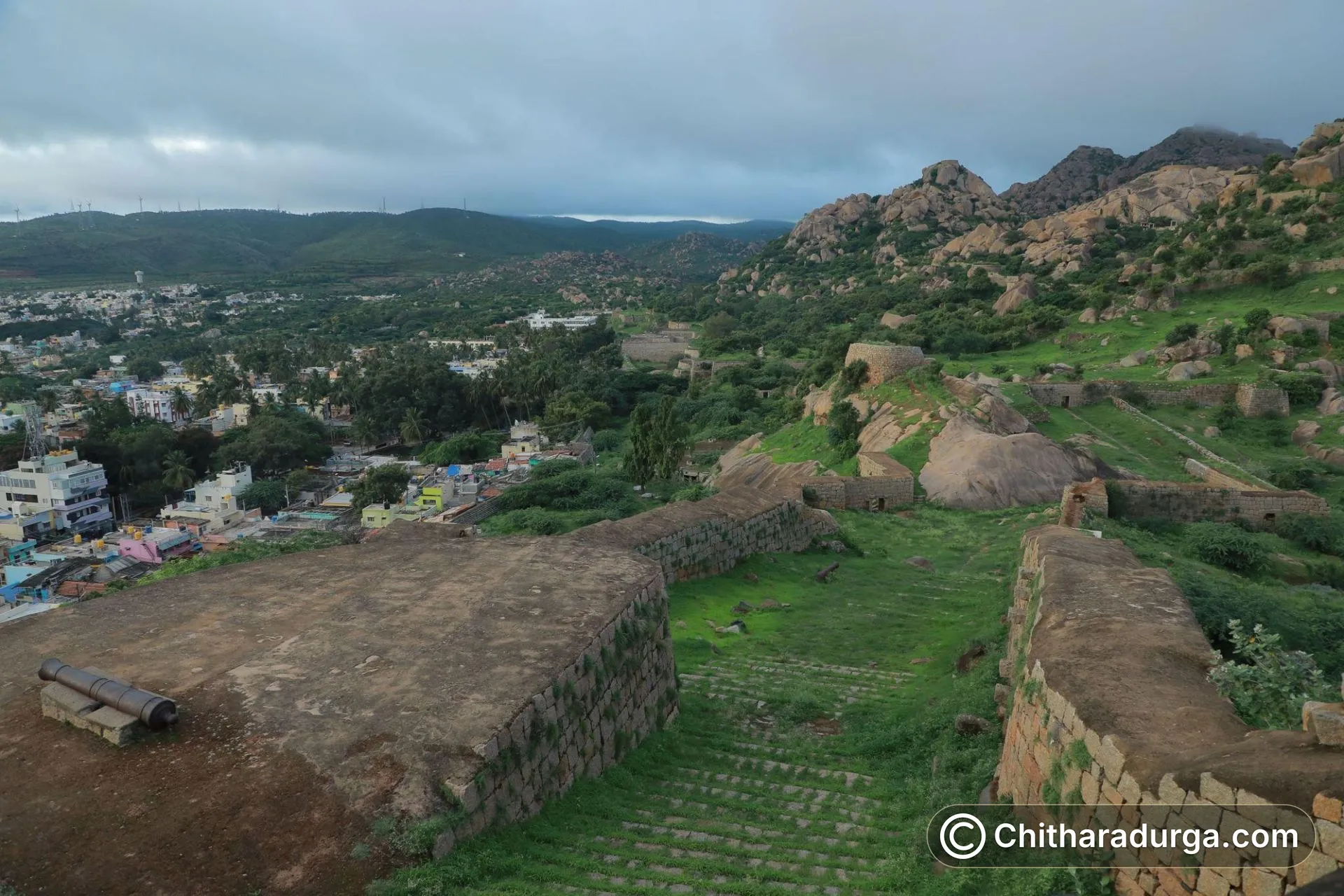
The defensive walls were carefully integrated into the rocky terrain. The fort once contained numerous gateways, smaller entrances, defensive openings and concealed approaches. Zigzagging passages made rapid enemy movement difficult, while strategically positioned bastions and watch points helped defenders observe approaching forces.
Rather than fighting against the landscape, the builders used the enormous natural boulders as part of the defence itself.
This combination of nature and military engineering is one of the fort's most remarkable characteristics.
The Stronghold of the Nayakas
The golden period of Chitradurga Fort is closely associated with the Nayakas or Palegars of Chitradurga.
Under their rule, the fortress was expanded and strengthened, while temples, tanks, administrative structures and military facilities were developed within its walls.
The fort became not merely a military installation but the centre of a functioning kingdom.
Within its protected landscape were royal and military structures, granaries, oil-storage facilities, water tanks, places of worship and residential areas.
The ruins that survive today allow visitors to imagine a time when these rocky hills were filled with soldiers, administrators, priests, traders and ordinary residents.
Madakari Nayaka and the Final Chapter
The name Madakari Nayaka has become inseparable from the history of Chitradurga.
The last major ruler, Madakari Nayaka V, ruled during a period of intense political competition in southern India. Chitradurga's strategic position and formidable fort made it important to surrounding powers.
Hyder Ali of Mysore made repeated attempts to bring Chitradurga under his control. The fortress resisted for years, but in 1779 Chitradurga finally fell to Hyder Ali.
Hyder Ali and later Tipu Sultan strengthened parts of the fort. Following Tipu Sultan's defeat at the end of the eighteenth century, the political control of the region changed again.
The fall of the Nayakas later became one of the most powerful themes in Kannada historical memory and literature.
Onake Obavva – Courage That Became a Legend
No story associated with Chitradurga Fort is more famous than that of Onake Obavva.
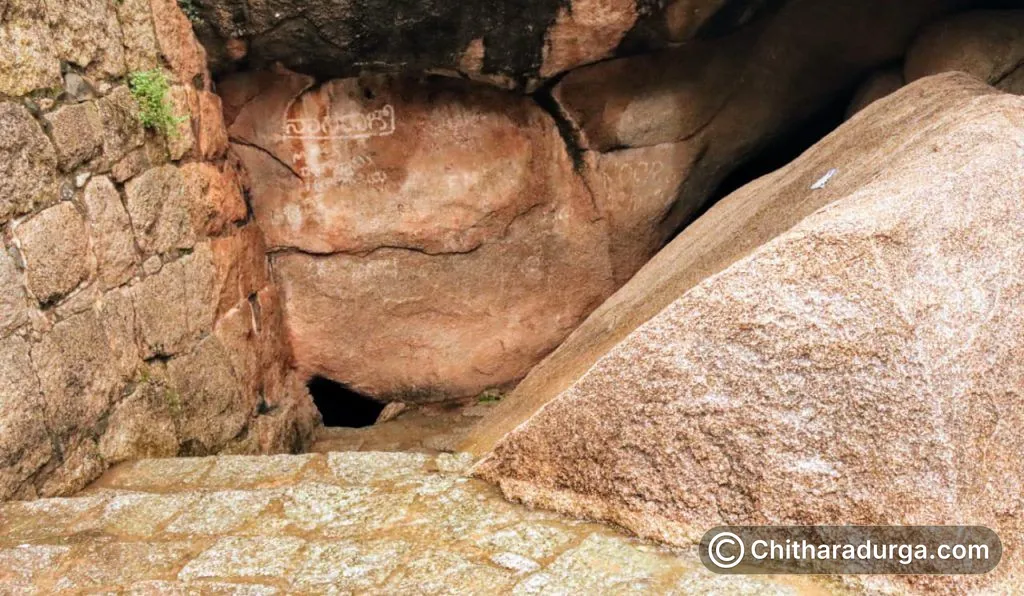
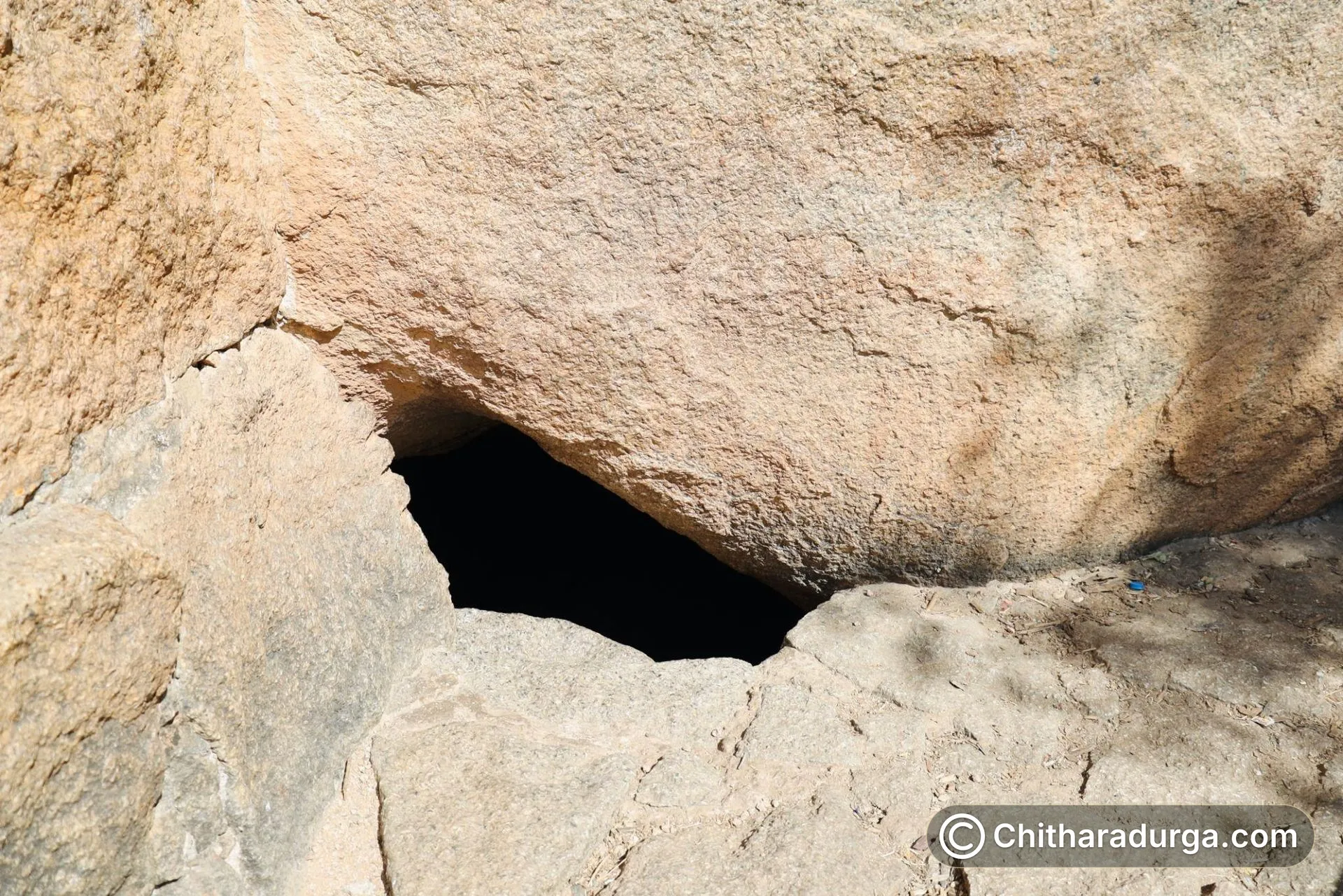
According to Karnataka's celebrated oral tradition, during an attack by Hyder Ali's forces, enemy soldiers discovered a narrow opening in the rocks through which they could enter the fort one at a time.
Obavva, the wife of a fort guard, noticed what was happening.
With no conventional weapon immediately available, she reportedly took an onake, a long wooden pestle traditionally used for pounding grain, and confronted the soldiers as they emerged through the narrow opening.
Her courageous resistance became one of Karnataka's best-known stories of individual bravery.
The opening associated with this story is known as Obavvana Kindi and remains one of the most visited places within Chitradurga Fort.
Temples Within the Fortress
Chitradurga Fort was not merely a military centre. It was also an important religious and cultural landscape.
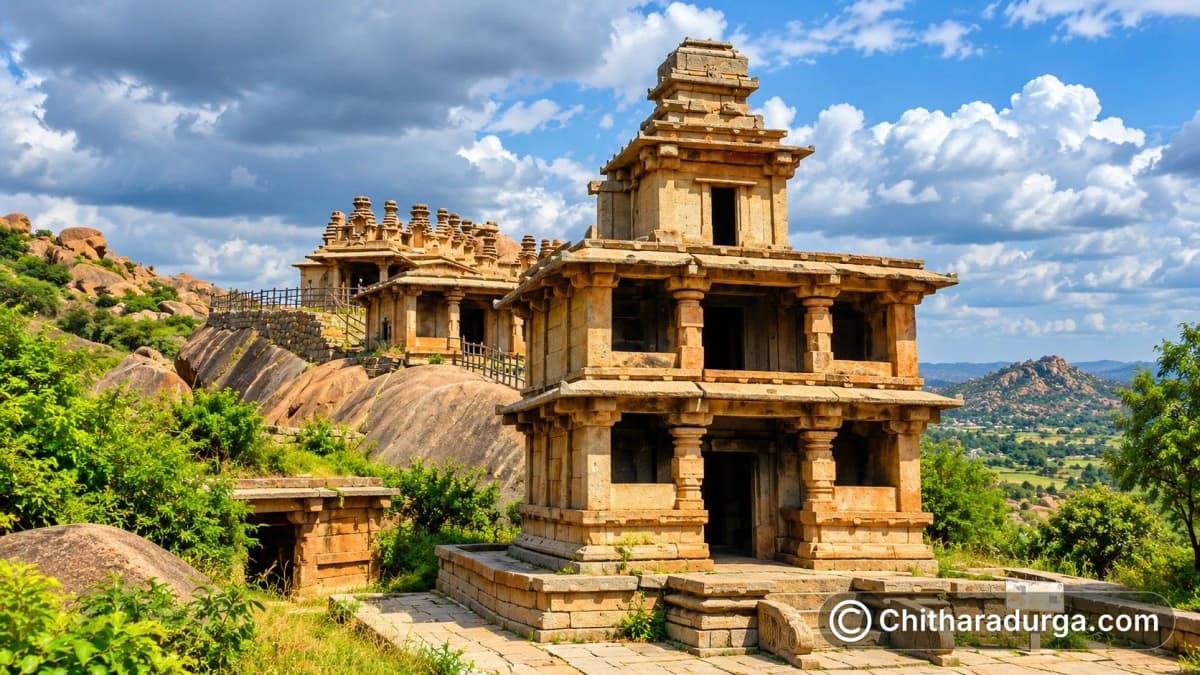
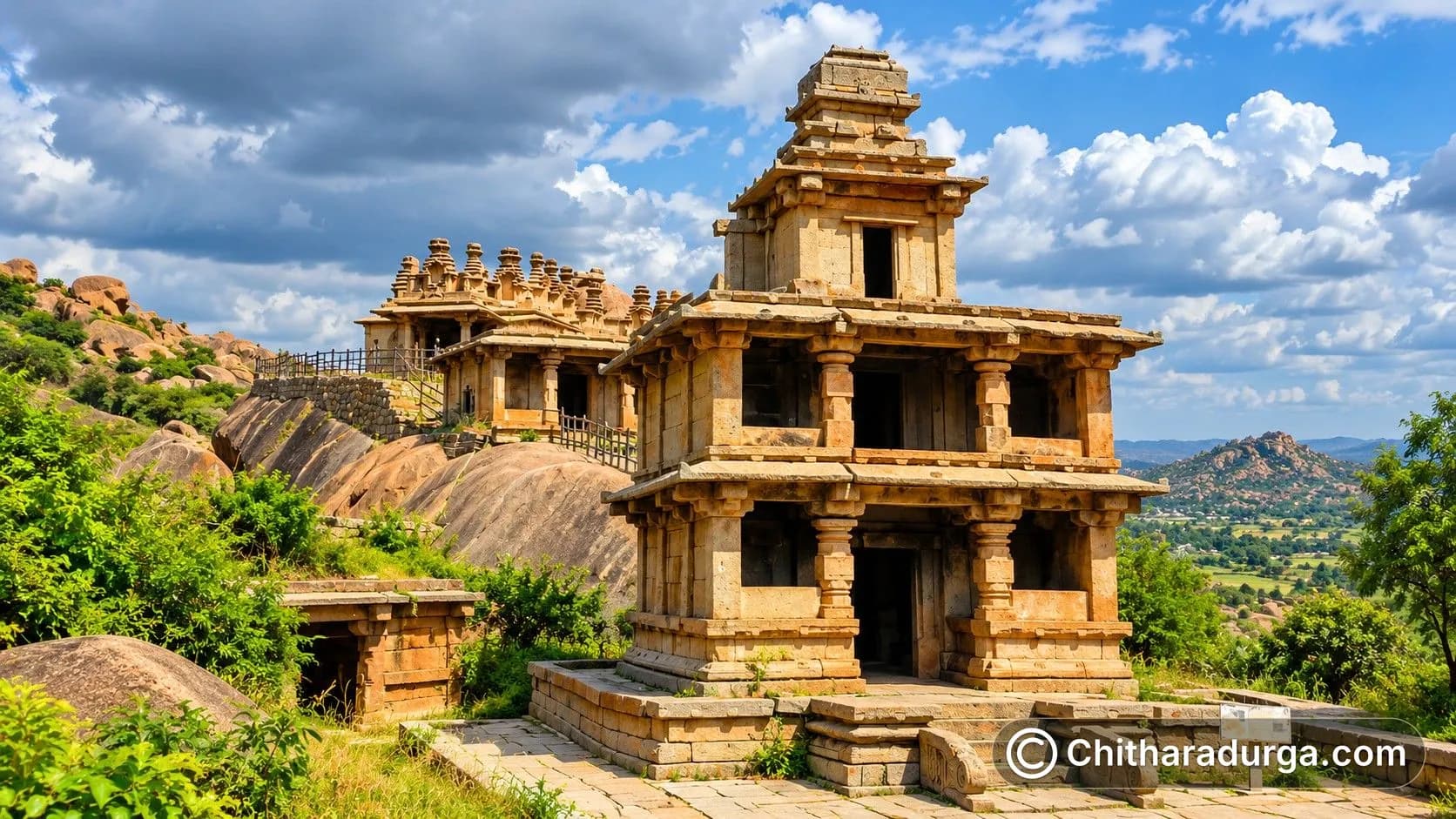
The fortified area contains several historic temples, including Hidimbeshwara, Sampige Siddheshwara, Ekanatheshwari, Phalguneshwara, Gopalakrishna and Anjaneya temples.
The Hidimbeshwara Temple is particularly interesting because of its connection with local traditions associated with the Mahabharata.
According to legend, the demon Hidimba lived in this region and fought Bhima during the Pandavas' exile. This mythology became intertwined with the dramatic boulders and hills of Chitradurga.
Thus the fort preserves not only political history but also centuries of faith, folklore and cultural memory.
An Ingenious Water Management System
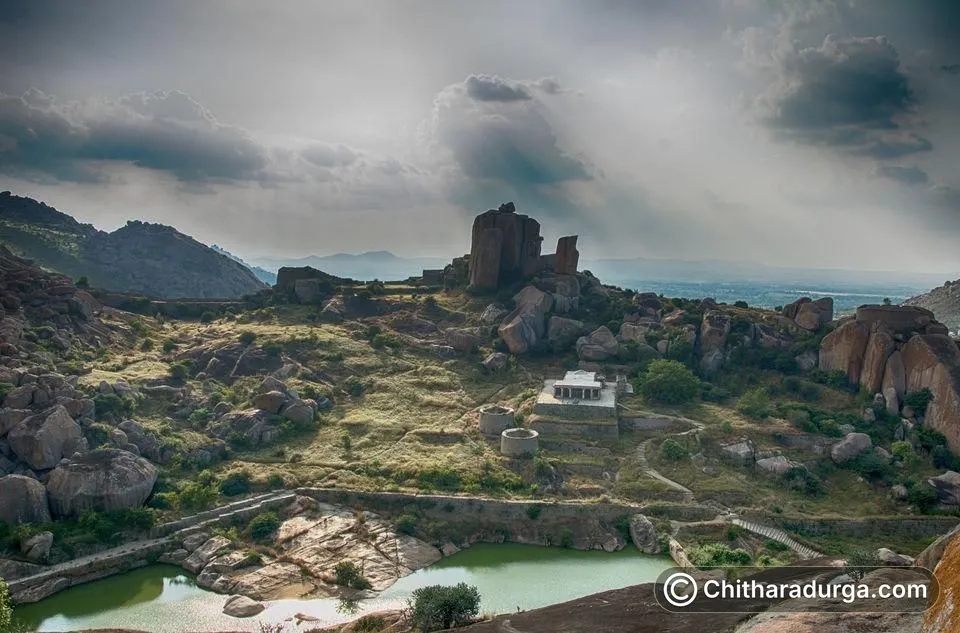
One of the fort's most impressive engineering features is its traditional rainwater harvesting and water-storage system.
For a fortress expected to withstand long sieges, a reliable supply of water was essential.
The builders used the natural slopes of the rocky terrain to collect rainwater and channel it into interconnected tanks and reservoirs. Water conservation was incorporated directly into the defensive planning of the fortress.
This demonstrates that Chitradurga Fort was not simply designed with walls and weapons in mind.
Its builders also planned for water, food storage and survival during prolonged military conflict.
A Masterpiece of Military Architecture
Walking through Chitradurga Fort reveals the intelligence behind its defensive design.
Massive stone walls follow the contours of the hills. Entrances change direction instead of providing a straightforward route. Watchtowers occupy strategic positions, while natural boulders create barriers and concealed spaces.
Historically, the fortress included 19 principal gateways, numerous smaller entrances and defensive openings, along with granaries, oil tanks, military quarters and gunpowder-grinding stones.
The result was a fortress in which an invading army unfamiliar with the terrain could easily become confused.
Kallina Kote – The Stone Fortress
The popular Kannada name Kallina Kote, meaning “Stone Fort,” perfectly describes Chitradurga.
Here, stone is everywhere.
Stone forms the hills.
Stone forms the walls.
Stone creates natural passages and defensive barriers.
And between those massive rocks lie centuries of stories.
The rugged granite landscape is so deeply connected with the fort that it is difficult to separate the natural monument from the human-made one.
A Living Symbol of Chitradurga
Chitradurga Fort represents several layers of the district's identity.
It tells the story of ancient dynasties.
It preserves the legacy of the Nayakas.
It recalls the courage of Madakari Nayaka and Onake Obavva.
Its temples preserve religious traditions, while its walls and water systems reveal remarkable engineering knowledge.
For visitors, exploring the fort is therefore much more than walking through an archaeological monument.
It is a journey through the political, military, cultural and legendary history of Chitradurga.
The Pride of Chitradurga
For centuries, the massive granite walls of Chitradurga Fort have stood against wind, rain, warfare and the passage of time.
Kings and kingdoms disappeared.
Battles became history.
Generations changed.
Yet the Stone Fortress remained.
Today, Chitradurga Fort stands as an enduring symbol of courage, resilience, architectural intelligence and the rich heritage of Karnataka.
If Chitradurga's history could be represented by a single monument, it would undoubtedly be its magnificent Kallina Kote—the Stone Fortress that continues to tell the story of a courageous land.