Why Chitradurga is Special?
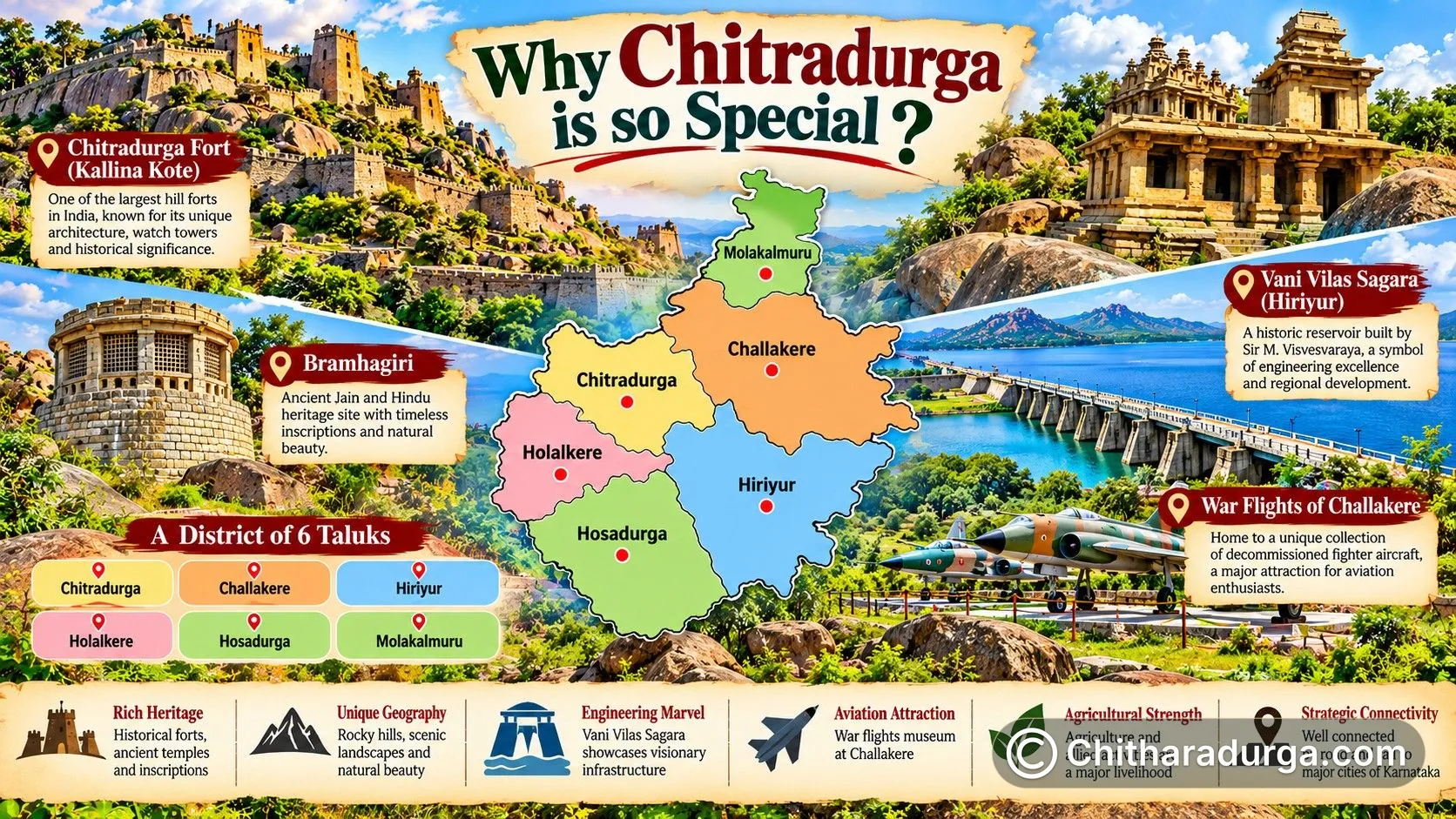
Few districts in Karnataka bring together prehistory, archaeology, mythology, military history, folk culture, literature and distinctive natural landscapes as powerfully as Chitradurga.
Its greatest visual identity comes from its extraordinary granite hills and enormous boulders. These natural formations were transformed over centuries into strategic defensive positions, culminating in the magnificent Chitradurga Fort, one of Karnataka's most remarkable hill forts.
The district is special because its history can be traced across several different periods of South Indian civilisation. Archaeological remains at places such as Chandravalli and Brahmagiri provide evidence of ancient settlements, while the Minor Rock Edicts of Emperor Ashoka demonstrate that the region was connected with the Mauryan Empire more than two thousand years ago.
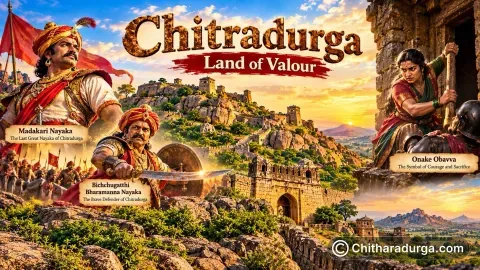
Chitradurga later became particularly famous under the Nayakas of Chitradurga, who developed the hill fortress into a formidable military stronghold. Their period produced stories of courage and resistance that remain deeply rooted in Karnataka's cultural memory.
Among them, the story of Onake Obavva occupies a special place. Her legendary resistance against enemy soldiers at the narrow passage now remembered as Obavvana Kindi transformed her into an enduring symbol of courage and presence of mind.
The district is equally remarkable for its folklore. Traditional songs, oral epics, devotional traditions and performing arts have preserved the experiences and beliefs of generations. Folk forms such as Dollu Kunitha, Veeragase, Kolata, Bhajane, Sobane, Devarapada, Suggipada, Thamate and Kahale form part of this diverse cultural landscape.
This extraordinary combination makes Chitradurga not simply a destination to visit, but a region to explore, understand and experience.