
History
Chandravalli – Digging into Chitradurga’s Ancient Past
By Raghavendra Padmashali · 6 October 2026

Chandravalli – Digging into Chitradurga’s Ancient Past
Hidden among the rugged hills and massive granite formations of Chitradurga lies Chandravalli, one of Karnataka’s most fascinating archaeological landscapes. While Chitradurga Fort tells the story of Nayaka rulers, battles and medieval military architecture, Chandravalli takes us much further back—into the prehistoric and early historic past of the region.
Archaeological discoveries at Chandravalli reveal evidence of human settlement extending back to ancient times, with especially important remains from the Iron Age and the early historic period. Excavations have uncovered pottery, brick structures, drains, ornaments, terracotta objects, inscriptions and large numbers of coins. Together, these discoveries show that Chandravalli was once a flourishing settlement with connections extending far beyond present-day Karnataka.
Chandravalli is therefore much more than a scenic valley.
It is an archaeological doorway into the ancient history of Chitradurga.

A Valley Surrounded by Hills
Chandravalli lies in a valley formed by three hills—Chitradurga, Kirakanakallu and Cholagudda.
Its natural setting, surrounded by rocky hills and supplied by watercourses, made the valley suitable for human habitation. The surrounding region also possessed mineral and building resources that may have contributed to the development of settlements and trade.
Long before the famous fort of Chitradurga reached its glory, people were already living, trading and building communities in this valley.
Digging into Thousands of Years of History
The real importance of Chandravalli came to light through archaeological excavations.
Early investigations were carried out during the first decades of the twentieth century, and important excavation work was later undertaken by archaeologists including M. H. Krishna and R. E. M. Wheeler. The discoveries revealed different phases of occupation and provided valuable evidence about ancient life in the Deccan.
Archaeologists uncovered remains of houses, brick walls, floors, fireplaces and covered drainage systems.
These discoveries suggest something remarkable:
Chandravalli was not simply a temporary camp or isolated settlement. It developed into an organised ancient township.
Chandravalli and the Satavahanas
One of the most important chapters in Chandravalli’s history is associated with the Satavahana period.
Large numbers of Satavahana and contemporary local coins have been recovered from the site. Archaeological evidence indicates that Chandravalli flourished particularly during the early centuries of the Common Era. Jaha
The discovery of brick houses, pottery, ornaments, coins and drainage structures suggests a settled community with economic activity and a developed material culture.
This makes Chandravalli an important site for understanding the early historic period of Karnataka and the wider Deccan.

Coins That Tell an Extraordinary Story
Among the most fascinating discoveries at Chandravalli are its coins.
Archaeologists discovered coins belonging to the Satavahanas and various regional rulers. Coins and objects belonging to later periods were also found, showing that the importance of the site did not disappear after a single dynasty.
But the discoveries that attract particular attention are the Roman coins.
Silver denarii associated with Roman emperors including Augustus and Tiberius have been reported from Chandravalli. Combined with finds such as Rouletted Ware and material comparable to Mediterranean amphorae, these discoveries suggest that the settlement participated, directly or indirectly, in long-distance commercial networks connected with the Roman world.

Imagine the significance of this discovery:
Coins from the Roman world found among the rocky hills of ancient Chitradurga.
They provide a fascinating glimpse into how interconnected parts of ancient India had already become nearly two thousand years ago.
Pottery – Everyday Life Preserved in the Earth
Coins tell us about rulers and commerce, but pottery reveals something about everyday life.
Excavations at Chandravalli produced several varieties of pottery, including black-and-red ware, red ware, black ware, Russet-Coated Painted Ware and Rouletted Ware.
Some vessels were decorated with painted and geometric designs. Archaeologists also identified bowls, dishes, lamps, vases and other household forms.
These fragments may appear simple today, but each one represents the daily activities of people who lived here centuries ago—cooking, storing grain, carrying water, eating and participating in trade.
Jewellery, Beads and Objects of Daily Life
The earth of Chandravalli has yielded more than coins and pottery.
Excavations uncovered beads made from materials such as agate, carnelian, rock crystal, jasper, glass, shell and terracotta, along with bangles and other ornaments.
Terracotta human and animal figures and even objects such as an ivory die have also been reported.
Such finds help transform archaeology from a story about kings into a story about ordinary people.
They tell us that Chandravalli had craftsmen, traders, households and communities with their own forms of decoration, recreation and social life.
Mayurasharma and the Kadamba Connection
Chandravalli also occupies an important place in the history of the Kadambas, one of Karnataka’s earliest native ruling dynasties.
An important inscription associated with Mayurasharma, founder of the Kadamba dynasty, was discovered at Chandravalli. The inscription records, among other things, the construction of a tank and provides important evidence about the political history of the region.
Thus Chandravalli forms an important link between the Satavahana age and the emergence of later political powers in Karnataka.

A Settlement Connected to a Wider World
Perhaps Chandravalli’s most exciting historical message is that ancient Chitradurga was not isolated.
The combination of local and foreign coins, fine pottery, ornaments, brick architecture and evidence of commercial activity suggests a community connected to broader networks of exchange.
The region’s mineral resources may also have played a role in supporting such economic activity.
Long before modern highways, railways or global commerce, goods, ideas and currencies were already moving across great distances.
Chandravalli was part of that ancient world.
Ankali Math and the Mysterious Caves
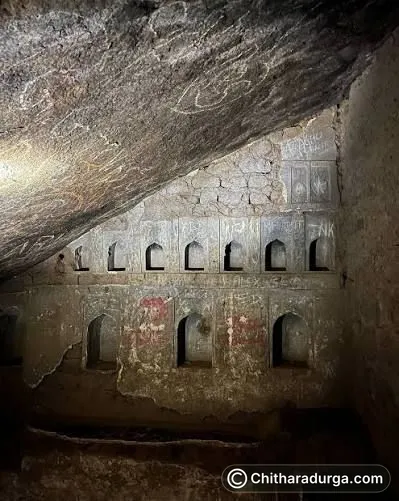
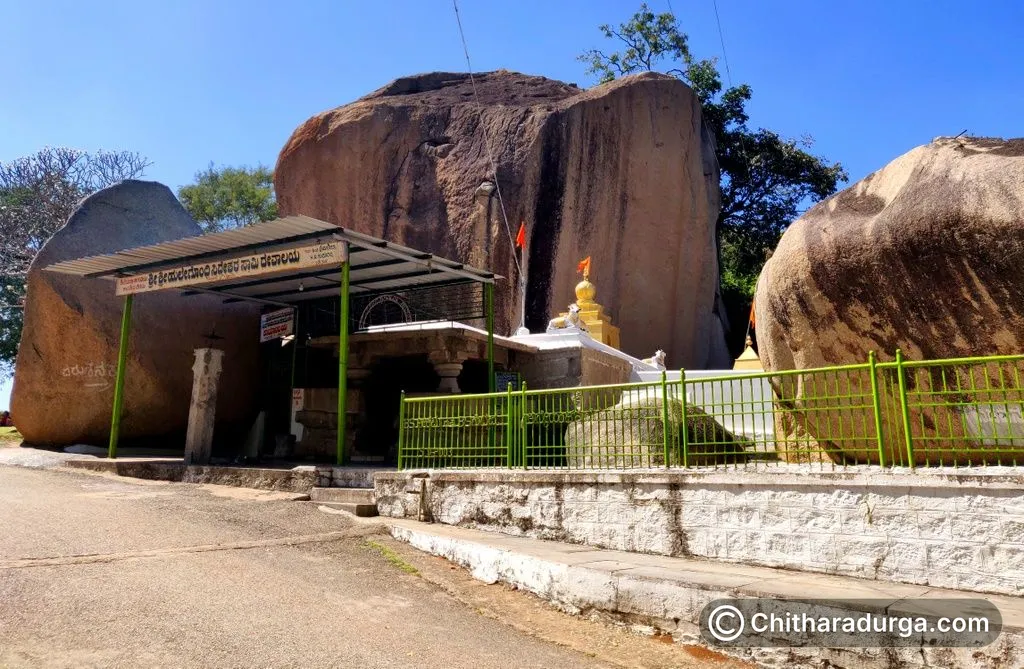
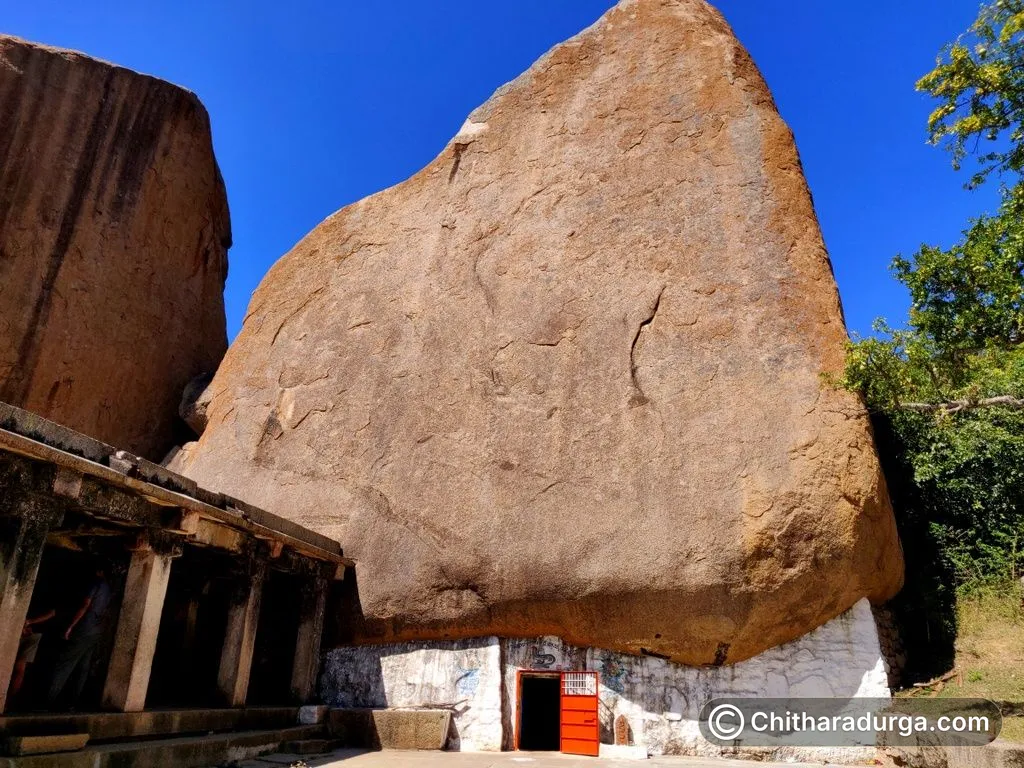
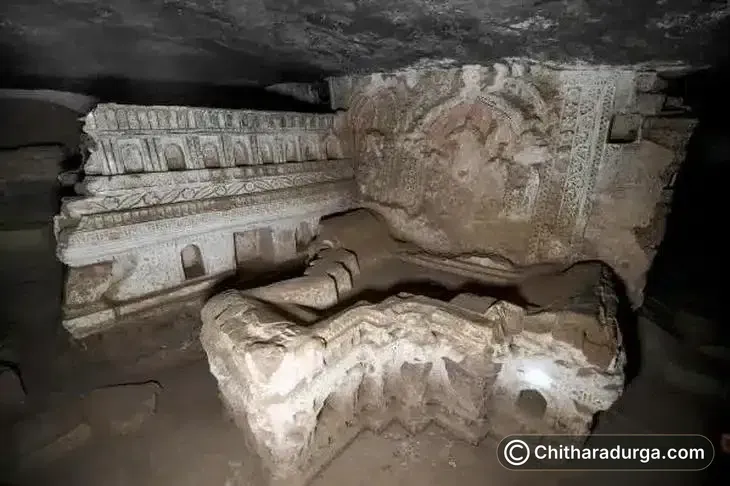
Another fascinating feature associated with Chandravalli is the Ankali Math cave complex.
Set among enormous rocks, the caves add an atmosphere of mystery and spirituality to the archaeological landscape. Tradition associates the caves with ascetics who used the secluded spaces for meditation.
The narrow and dark passages inside the rocky formations create an entirely different experience from the open archaeological valley outside.
Together, the caves, hills, water and archaeological remains make Chandravalli a place where history, nature, spirituality and mystery meet.
Chandravalli Lake and the Natural Landscape
The archaeological landscape is complemented by the Chandravalli lake and surrounding hills.
The water body, rocky terrain and vegetation give the area a peaceful character very different from the dramatic military atmosphere of Chitradurga Fort.
This combination makes Chandravalli valuable not only to historians and archaeologists but also to visitors interested in nature and heritage.
One can stand in this quiet valley today and imagine that beneath and around the same ground once existed homes, workshops, traders and generations of ancient inhabitants.
Before the Nayakas, Before the Fort
Chitradurga is popularly associated with Madakari Nayaka, Onake Obavva and the magnificent Kallina Kote.
But Chandravalli reminds us that Chitradurga’s history began much earlier.
Before the Nayakas ruled...
Before the great fort reached its present form...
Before many of Karnataka’s later kingdoms emerged...
People were already living and building communities at Chandravalli.
Archaeological remains from the wider Chitradurga region take its human story deep into antiquity, while Chandravalli provides especially rich evidence for its early historic settlement.
An Open Book Beneath the Earth
Every archaeological excavation is like opening another page of a book buried underground.
A broken pot can tell us how people lived.
A brick wall can reveal how they built their homes.
A drain can demonstrate their knowledge of urban organisation.
A bead can reveal craftsmanship.
An inscription can preserve the name of a ruler.
And a Roman coin can connect Chitradurga with a world thousands of kilometres away.
That is what makes Chandravalli extraordinary.
Chandravalli – Where Chitradurga’s Ancient Story Begins
Chandravalli deserves to be recognised as one of the most important heritage landscapes of Chitradurga district.
It reveals a Chitradurga that existed long before its celebrated medieval heroes—a region of ancient settlements, skilled craftsmen, merchants, rulers and communities connected to wider networks of civilisation.
If Chitradurga Fort represents the district’s courage and military glory, Chandravalli represents its antiquity, archaeology and ancient civilisation.
Chandravalli is not merely a place where history happened. It is a place where history was buried, excavated and brought back to life.